Category Archives: History

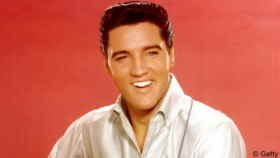
Elvis A. Presley, Rock n Roll Singer, 8th cousin, 1x removed

Elvis Presley is my 8th cousin 1x removed. The ancestor who connect us both in my genealogical chart is Robert Napier (1660 – 1721), my 8th great grandfather.

Elvis Aaron Presley was born on January 8, 1935 and died on August 16, 1977. He is also known mononymously as Elvis, was an American singer and actor. Regarded as one of the most significant cultural icons for the 20th century, he could be often referred to as the “King of rock ‘n roll” or just “the King”.

My genealogical shows the ancestor that Elvis and I share:

Elvis Aaron Presley (1935 – 1977)
8th cousin 1x removed

Gladys L. Presley (1912 – 1958)
Mother of Elvis Aaron Presley

Robert Lee “Bob” Smith (1878 – 1932)
Father of Gladys L. Presley

Mileage Obediah (William) Smith (1837 – 1909)
Father of Robert Lee “Bob” Smith

Mary Frances Heard (1824 – 1865)
Mother of Mileage Obediah (William) Smith

Woodson Heard (1782 – 1849)
Father of Mary Frances Heard

ELIZABETH NAPIER FITZPATRICK (1750 – 1790)
Mother of Woodson Heard

Mary Perrin Woodson (1722 – 1821)
Mother of ELIZABETH NAPIER FITZPATRICK

Frances Napier (1694 – 1778)
Mother of Mary Perrin Woodson

Robert Napier (1660 – 1721)
Father of Frances Napier

William McKinley the 25th U.S. President, 12th cousin 7x removed

President William McKinley is my 12th cousin 7x removed. The ancestor who connects us together is Princess Mary Stewart (1380 – 1382), my 18th great grandmother.

William McKinley Jr. (January 29, 1843 – September 14, 1901) was the 25th president regarding the United States, serving from March 4, 1897, until his assassination half a year into his second term. During his presidency, McKinley led the nation to victory within the Spanish–American War, raised protective tariffs to market American industry and kept the world from the gold standard in a rejection of free silver (effectively, expansionary monetary policy).

My genealogical chart shows how President William McKinley and I share a common ancestor:

President William McKinley (1843 – 1901)
12th cousin 7x removed

Nancy Campbell Allison (1809 – 1897)
Mother of President William McKinley

Ann CAMPBELL (1774 – 1846)
Mother of Nancy Campbell Allison

Obadiah CAMPBELL (1743 – 1822)
Father of Ann CAMPBELL

Samuel CAMPBELL (1695 – 1780)
Father of Obadiah CAMPBELL

William CAMPBELL (1635 – 1718)
Father of Samuel CAMPBELL

Duncan CAMPBELL (1605 – 1645)
Father of William CAMPBELL

Mary ERSKINE ERSKINE (1575 – 1613)
Mother of Duncan CAMPBELL

Alexander ERSKINE , Sir (1521 – 1591)
Father of Mary ERSKINE ERSKINE

John ERSKINE , Lord Erskine (1500 – 1555)
Father of Alexander ERSKINE , Sir

Isabella Elizabeth CAMPBELL (1468 – 1518)
Mother of John ERSKINE , Lord Erskine

Agnes Kennedy (1450 – )
Mother of Isabella Elizabeth CAMPBELL

Gilbert Kennedy (1406 – )
Father of Agnes Kennedy

Princess Mary Stewart (1380 – 1382)
Mother of Gilbert Kennedy

Zachary Taylor the 12th President of the United States,10th cousin 3x removed

President Zachary Taylor is my 10th cousin 3x removed. The ancestor on my genealogical chart who connects us together is Edward NEVILLE, Baron Bergavenny (1412 – 1476), my 12th great grandfather.

Zachary Taylor was born on November 24, 1784 and died on July 9, 1850. He was the 12th president associated with the United States, serving from March 1849 until his death in July 1850. Taylor previously was a lifetime career officer in the United States Army, rose to your rank of major general and became a national hero due to his victories when you look at the Mexican–American War. As a result, he won election towards the White House despite his vague political beliefs. His top priority as president was preserving the Union, but he died sixteen months into his term, prior to making any progress regarding the status of slavery, which was in fact inflaming tensions in Congress.

My genealogical chart reveals that ancestor we both share:

President Zachary Taylor (1784 – 1850)
10th cousin 3x removed

Sarah Dabney Strother
Mother of President Zachary Taylor

William Strother
Father of Sarah Dabney Strother

Francis Thornton Strother (1700 – 1751)
Father of William Strother

William B. Strother III (1665 – 1726)
Father of Francis Thornton Strother

Eleanor Conyers (1570 – 1611)
Mother of William B. Strother III

Sir John Conyers (1550 – 1610)
Father of Eleanor Conyers

Anne Dawney (1515 – )
Mother of Sir John Conyers

Dorothy Neville (1496 – 1532)
Mother of Anne Dawney

Richard Neville (1468 – 1530)
Father of Dorothy Neville

Henry Neville, Sir (1437 – 1469)
Father of Richard Neville

Edward NEVILLE, Baron Bergavenny (1412 – 1476)
Father of Henry Neville, Sir

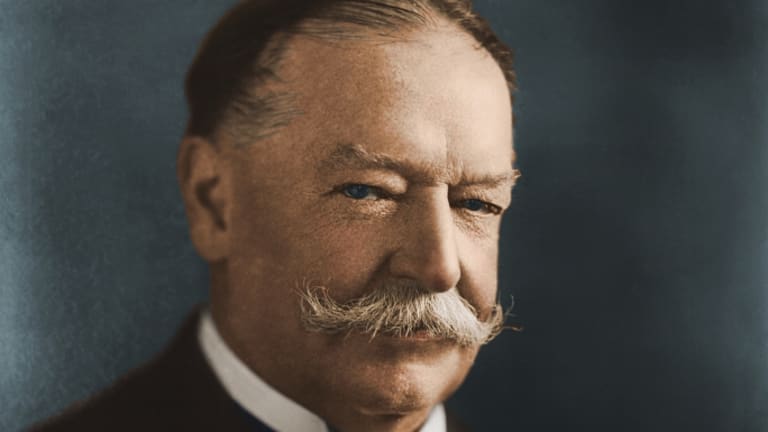
William Howard Taft the 27th President of the United States, 14th cousin 2x removed

President William Howard Taft is my 14th cousin 2 x removed. The ancestor who connects both of us together in my genealogical tree is Joan Plantagenet Beaufort , Countess (1379 – 1440), my 13th great grandmother.

William Howard Taft was born on September 15, 1857 and died on March 8, 1930. He had been the 27th president associated with United States (1909–1913) as well as the tenth chief justice associated with United States (1921–1930), the sole person to have held both offices. Taft was elected president in 1908, the chosen successor of Theodore Roosevelt, but was defeated for re-election by Woodrow Wilson in 1912 after Roosevelt split the Republican vote by running as a third-party candidate. In 1921, President Warren G. Harding appointed Taft to be chief justice, a posture by which he served until four weeks before his death.

This is the genealogical chart the shows how William Howard Taft and I connect to Joan Plantagenet Beaufort , Countess (1379 – 1440), my 13th great grandmother:

President William Howard Taft (1857 – 1930)
14th cousin 2x removed

Alphonso Taft (1810 – 1891)
Father of President William Howard Taft

Peter Rawson Taft
Father of Alphonso Taft

Rhoda Rawson (1749 – 1827)
Mother of Peter Rawson Taft

Abner Rawson (1721 – 1794)
Father of Rhoda Rawson

Edmund Rawson
Father of Abner Rawson

Susanna WILSON
Mother of Edmund Rawson

John WILSON (1621 – 1691)
Father of Susanna WILSON

Elizabeth Mansfield (1595 – 1658)
Mother of John WILSON

Sir John Mansfield (1572 – 1610)
Father of Elizabeth Mansfield

Anne de Eure (1536 – 1566)
Mother of Sir John Mansfield

Sir Ralph Eure
Father of Anne de Eure

William Eure
Father of Sir Ralph Eure

Ralph Eure (1453 – 1539)
Father of William Eure

William Sir (Hoare ) Eure (1440 – 1484)
Father of Ralph Eure

Eleanor Eleanore de Greystoke (1416 – 1468)
Mother of William Sir (Hoare ) Eure

Elizabeth de Ferrers (1395 – 1434)
Mother of Eleanor Eleanore de Greystoke

Joan Plantagenet Beaufort , Countess (1379 – 1440)
Mother of Elizabeth de Ferrers

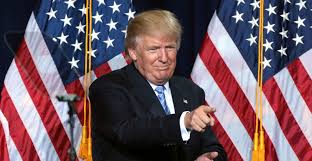
Does Trumps new immigration plan sway Republicans from not addressing DACA?

The White House is planning to discharge a broad outline of recommended immigration reforms targeted at unifying congressional Republicans about the concern, following weeks of conversations between senior adviser Jared Kushner and a lot of conservative teams.

However, the proposition is short of trustworthy information and omits discourse on the Obama-era Deferred Action for Childhood Arrivals program that Democrats have frequently stated they desire to solve.

President Donald Trump is scheduled to reveal the master plan Thursday. The White House is advertising the blueprint as responding to border protection and shifting toward a merit-based immigration structure, which provides personal preference to highly trained and educated persons.

However, the release of the innovative concepts comes among discord inside the Trump current administration over how to deal with immigration guidelines.

The discord led to the latest departure of Homeland Security Secretary Kirstjen Nielsen, who also was a part of primary interactions in the White House concerning an immigration strategy.

The White House approach to change the country’s immigration structure likewise comes up against the backdrop of the steep uptick of worries on the southern national boundaries. Additional individuals have been apprehended unlawfully crossing the US-Mexico boundary this fiscal year compared to any year since 2009, as outlined by Customs and Border Protection statistics.

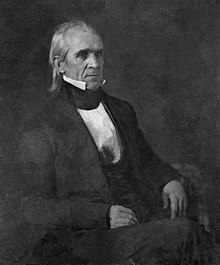
James Knox Polk ,11th President of the United States, 9th cousin 6x removed

James Knox Polk, the 11th President of the United States in my 9th cousin 6x removed. The ancestor who connect us together is Sir James 1st Lord Duke Hamilton Hamilton 6th Laird of Cadzow Hamilton (1423 – 1479), my 11th great grandfather.

James Knox Polk was born on November 2, 1795 died on June 15, 1849. He was the 11th President of the United States (1845-1849). He previously was Speaker of the House of Representatives (1835-1839) and Governor of Tennessee (1839-1841). A protégé of Andrew Jackson, he was a member of the Democratic Party and an advocate of Jacksonian democracy. During Polk’s presidency, America expanded significantly with the annexation of the Republic of Texas, the Oregon Territory, and the Mexican Cession following the American victory in the Mexican-American War. After building a successful law practice in Tennessee, Polk was elected to the state legislature (1823) and then to the United States House of Representatives in 1825, becoming a strong supporter of Jackson. After serving as chairman from the Ways and Means Committee, he became Speaker in 1835, the only President to have been Speaker Polk left Congress to run for governor; he won in 1839 but lost in 1841 and 1843. He was a dark horse candidate for the Democratic nomination for President in 1844; he entered his party’s convention as a potential nominee for vice president but emerged as a compromise to head the ticket when no presidential applicant could secure the necessary two-thirds majority.

The genealogical chart shows how President James Polk and I share a common ancestor:

James Knox Polk ,11th President of the United States (1795 – 1849)
9th cousin 6x removed

Samuel Ezekial Polk (1772 – 1827)
Father of James Knox Polk ,11th President of the United States

Ezekial Franklin Polk (1747 – )
Father of Samuel Ezekial Polk

William Polk (1700 – 1753)
Father of Ezekial Franklin Polk

Robert Bruce Polke (1640 – 1704)
Father of William Polk

Robert Bruce Pollock (1601 – 1640)
Father of Robert Bruce Polke

Robert Pollok (1559 – 1625)
Father of Robert Bruce Pollock

Janet Mure (1524 – 1576)
Mother of Robert Pollok

Elizabeth Hamilton (1505 – )
Mother of Janet Mure

Gavin Hamilton (1480 – )
Father of Elizabeth Hamilton

Sir James 1st Lord Duke Hamilton Hamilton 6th Laird of Cadzow Hamilton (1423 – 1479)
Father of Gavin Hamilton

President John Tyler, 5th cousin 6x removed

President John Tyler is my is my 5th cousin 6x removed. That ancestor who connect both of us is Robert Booth, my 10th great grandfather. John Tyler was born on March 29, 1790, and died on January 18, 1862. He was, in fact, the tenth president of the United States from 1841 to 1845 after briefly serving as the tenth vice president (1841); he was elected to the latter office on the 1840 Whig ticket with President William Henry Harrison. Tyler ascended to the presidency after Harrison’s death in April 1841, only a month after the start of the new administration. He was a stalwart supporter of states’ rights, and as president, he adopted nationalist policies only when they did not infringe on the powers of the states. His unexpected rise towards the presidency, with the resulting threat to the presidential ambitions of Henry Clay and other politicians, left him estranged from both major political parties.

This is how President John Tyler appears on my genealogical chart to the ancestor we both share:

President John Tyler IV, 10th President of the United States (1790 – 1862)
5th cousin 6x removed

Mary Marot Armistead (1761 – 1797)
Mother of President John Tyler IV, 10th President of the United States

Robert Booth Armistead
Father of Mary Marot Armistead

Ellyson Armistead Captain (1690 – 1757)
Father of Robert Booth Armistead

Moss Booth (1682 – 1750)
Mother of Ellyson Armistead Captain

Robert Booth (1644 – 1695)
Father of Moss Booth

Robert Booth (1610 – 1657)
Father of Robert Booth

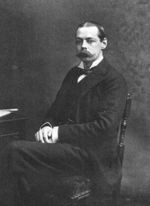
Lord Randolph Henry Spencer-Churchill , 12th cousin 2x removed

Lord Randolph Henry Spencer-Churchill is my 12th cousin 2 x removed. The ancestor who connect us is Catherine Neville, my 11th great grandmother. Lord Spencer-Churchill was born at 3 Wilton Terrace, Belgravia, London. He was initially independently schooled, and later went to Tabor’s Preparatory School at Cheam, London. In January 1863 he attended Eton College, in which he continued to be until July 1865. He did not stick out either at academic work or sport while at Eton; his contemporaries identify him as a vivacious and somewhat unmanageable young man. In October 1867 he matriculated at Merton College, Oxford. He had a preference for sports, but was also an enthusiastic reader, and acquired a second-class degree in jurisprudence and contemporary history in 1870. In 1871, Churchill and his uncle George Spencer-Churchill were definitely initiated in to the rites of Freemasonry, as later on his son Winston would be. In 1874 he was chosen to Parliament as Conservative member for Woodstock, Oxfordshire defeating George Brodrick, a Fellow, and afterwards Warden, of Merton College. His maiden speech, delivered in his initial session, encouraged kind comments from Harcourt and Disraeli, who published to the Queen of Churchill’s ‘energy and natural flow’.

These are the ancestors who connect Lord Randolph Henry Spencer-Church and I:

Randolph Henry Spencer-Churchill ,Lord (1849 – 1895)
12th cousin 2x removed

John Winston Sir 7th Duke of Marlborough Spencer-Churchill (1822 – 1883)
Father of Randolph Henry Spencer-Churchill ,Lord

Jane Stewart Stewart (1798 – 1844)
Mother of John Winston Sir 7th Duke of Marlborough Spencer-Churchill

Jane Bayley Bayly alias Paget (1774 – 1842)
Mother of Jane Stewart Stewart

Henry Bayly alias Paget
Father of Jane Bayley Bayly alias Paget

Caroline Paget
Mother of Henry Bayly Bayly alias Paget

Brig. Gen. Thomas Paget
Father of Caroline Paget

Henry Paget
Father of Brig. Gen. Thomas Paget

Frances Rich (1617 – 1672)
Mother of Henry Paget

Henry Rich, Earl (1617 – 1672)
Father of Frances Rich

Penelope Devereux (1562 – 1607)
Mother of Henry Rich, Earl

Do you believe that tolerance and civility, not love, will heal our society?

In “Love Your Enemies,” author and American Enterprise Institute President Arthur Brooks offers a formula for healing a country divided: “Go find someone with whom you disagree; listen reflectively, and take care of him or her with respect and love. The rest will flow naturally from there.”

We build a good society; Brooks states, the way we build a great marriage: through love.

Brooks is right that how we speak to one another concerns. The language of contempt dissolves the trust. Contempt drives out any impulse we might have toward empathy and understanding, and it replaces reasoned argument with litmus tests for ideological purity.

Moving toward greater empathy, understanding, and intellectual openness will improve the quality of our public discourse and make us healthier, happier plus better human beings.

However, the shift that Brooks is championing will not be inspired by the exalted virtue of really like. It will be the fruit of the less-exalted tempered virtues of civility and tolerance.

A defender of Brooks’ thesis might say that I am splitting hairs – that it does not matter if we use the vocabulary of love or the language of civility and tolerance. However, words make a difference.

If we uncritically accept as the appropriate standard for the good society and toss aside civility and tolerance as “garbage standards,” we set ourselves up for failure.

To begin, as an expectation for the broader society, love is too tall an order. We learned this long ago from moral philosophers like David Hume and Adam Smith, who observed that there are cognitive limits to how far we can extend our sympathy.

Genuine love requires close-in local knowledge that we cannot cultivate beyond a relatively small circle of family and friends.

The good news, though, is that love is not needed to achieve the good society. On this point, Nobel Laureate F.The. Hayek offered a significant distinction between the social norms that are essential to the small intimate purchase of known friends and family and the norms essential to the extended order of the broader community.

The right standard for the small band may very well be love. It is in this sphere that we have enough local knowledge to attend to particular needs in nuanced ways. However, as Hayek argued, if we apply this regular to society as a whole, we will destroy it.

Brooks tells us that expectations of civility and tolerance are too low of a bar; that if we want “true unity” in America, we must find our “shared whys.” However, unity is the wrong goal.

A country of self-governing citizens is not one of the shared ends; it is among shared rules: individual liberty, equality before the law, property rights and impersonal rules of contract, for example.

The cultural norms that correspond to such rules are those like civility and tolerance, norms that can be applied generally, without a great deal of close-in, local knowledge.

Expectations of civility and tolerance are usually admittedly cold and impersonal. That is why they are not sufficient standards for, say, a happy family life. However, it is their impersonal quality that makes them appropriate requirements for the broader modern society.

As cultural norms, civility and tolerance allow us to pursue our different ends without checking in with one another, without any expectation that people are aligning our beliefs and actions with some shared purpose.

Once we commit to unity – even as a direction and aspiration – the individual who diverges from the pack will always be seen as impeding progress toward the ideal. Moreover, therein is situated a formula for cruelty.

Though it may seem counterintuitive, it is the requirement of civility and tolerance that sets the foundation for the civil society, one characterized by pluralism and human thriving.

By not expecting more than we can offer, by not insisting on enjoying and unity of purpose, we leave the social space contestable, open to countless conversations, out of which we have the best chance of forging bonds of mutual respect and trust.

Brooks is correct that if we are going to overcome the culture of contempt, we need better conversational ethics, such as a commitment to humility, regard and knowledge-seeking curiosity in the face of disagreement. However, we do not need love to cultivate these practices. We need the tempered virtues of civility and tolerance.

Should we take Alexandria Ocasio-Cortez seriously, and not literally?

Trump and Ocasio-Cortez are rash, unapologetic, and enigmatic New Yorkers with ardent cult followings. They will have equally tenuous associations with reality. While President Trump and Rep. Alexandria Ocasio-Cortez, D-N.Y., stand starkly against one another, they are pretty similar in their refusal to accept the seriousness of the workplaces they hold.

To her credit, Ocasio-Cortez became the youngest person in the home of Representatives while operating as a waitress. That is a distinctly American accomplishment, one which deserves our admiration.

In order to his credit, Trump was a billionaire who paid attention to the lamentations of ordinary Americans and defeats out probably the most talented industry of presidential primary applicants inside our recent history to be the president of America.

The DNC and RNC establishments took neither Ocasio-Cortez nor Trump seriously, and today they are uniquely positioned to determine the terms of these policies and strategies so that they should start acting honestly like it.

Ocasio-Cortez’s gripes with fact-checking rough mirror billionaire business owner and Trump ally Peter Thiel’s distillation of the president’s relationship along with his critics.

“I think a significant factor that needs to be distinguished here is that the mass media is always getting Trump literally. It is no way takes him seriously, but it usually takes him actually,” Thiel told the Nationwide Press Club through the 2016 election, channeling columnist Salena Zito. “I believe lots of voters who vote for Trump get Trump seriously, however, not literally, when they hear things such as the Muslim comment or the walls comment, their question isn’t, ‘Are you likely to build a walls like the Great Walls of China?’ or, you understand, ‘How exactly will you enforce these assessments?’ What they hear will be we are going to possess a saner, a lot more sensible immigration policy.”

Thiel’s evaluation is correct. Nonetheless, it highlights a single flaw with both Trump and AOC’s methods in public messaging.

Both stoke fears when advocating their respective policies. Trump depends on fearmongering with the imagery of “rapists and murderers” crossing our southern border to outlandishly advocate for pretty commonsense border protection. AOC forebodes that “like, the planet is gonna finish in 12 many years,” if we don’t deal with climate change, accurately diagnosing our political sphere’s apathy towards climate modify, but ineptly advocating for an Eco-friendly New Deal that may do nothing to lessen greenhouse gasoline emissions and everything to nationalize vast swaths of the United States economy.

We do not doubt that Trump, a Queen’s outsider who built his brand name to enter the billionaires’ golf club, and Ocasio-Cortez, a millennial self-starter who has observed – first-hand – a couple of failures of the best economic system in history, genuinely wish to prove their authority within their positions.

However, they ought to begin rising to the event. They are not courtroom jesters, eliciting few times of reality, bookended by jokes and nonsense. They are users and cultural leaders of the governing bodies of the free world, and the general public and the media, on both sides of the aisles, must keep them compared to that standard.