Category Archives: Culture

Did you know that three Russian billionaires have resigned from the board of directors of LetterOne, a $22 billion investment corporation, after the company barred two Russian oligarchs from participating due to the Russian invasion of Ukraine?

Three Russian billionaires have resigned from the board of directors of a $22-billion investment company during their country’s escalating invasion of Ukraine.
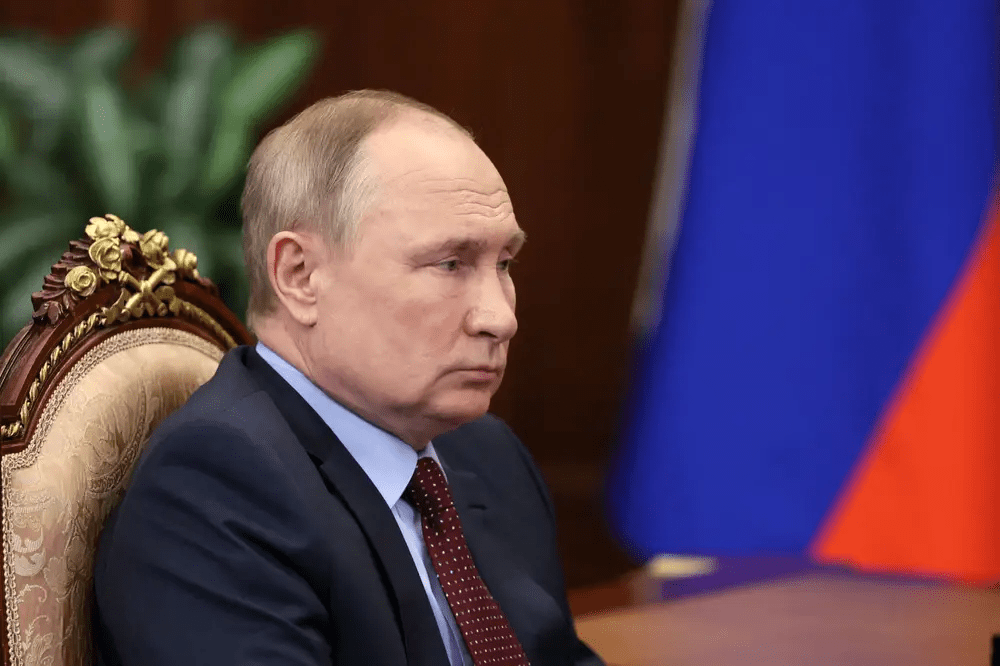
Russian President Vladimir Putin. 
MIKHAIL KLIMENTYEV/SPUTNIK/AFP via Getty Images

This follows LetterOne’s decision last week to freeze out Mikhail Fridman and Petr Aven, who are subject to Western-imposed sanctions, by barring access to their premises and prohibiting them from communicating with workers. German Khan, Alexei Kuzmichev, and Andrei Kosogov — none of whom are sanctioned – all resigned from their jobs at the business on Monday. “While none of these three people have been sanctioned, they think that taking this action is in the long-term best interests of LetterOne, its workers, and the many jobs supported by its portfolio firms,” the company stated in a statement to Insider. Khan, 60, a cofounder of LetterOne and a partner in Alpha Group, said in a statement that he backed the board’s decisions and urged an end to the fight. “The bulk of LetterOne’s founders have strong roots in Ukraine, and the devastation of the places where I spent my youth and which are now home to our forefathers’ graves is sad,” added Khan, who has a net worth of almost $6.9 billion, according to Bloomberg. Kuzmichev, 59, is a cofounder of Alfa-Bank, Russia’s largest private bank, and has an estimated net worth of around $5.2 billion, according to Bloomberg. Kosogov, 60, is a member of the Alpha Group’s board of directors and is worth $1.2 billion, according to Forbes.

Additionally, LetterOne said in Monday’s statement that Fridman and Aven, who stepped down from the company’s board of directors last Wednesday, had their shares “frozen permanently” and are no longer eligible to receive dividends or other financial funds from LetterOne. Mervyn Davies, the former chairman now CEO of LetterOne, told the Financial Times that they were shut out of offices, denied access to records, and prohibited from communicating with staff. LetterOne gives $150 million to aid those devastated by Ukraine’s conflict, and shareholders have decided that all dividends would go toward relief efforts, according to a corporate statement.

Reference
3 Russian billionaires resigned from the board of the $22 billion investment firm LetterOne after it locked out 2 Russian oligarchs over the invasion of Ukraine. https://www.businessinsider.com/russian-billionaires-oligarchs-letterone-resign-step-down-board-lock-out-2022-3?fbclid=IwAR2-aejj2I_yRuFdLYqmeybT9L8_pPHLzeUKdXbUrvwJBc720dCMUc70Edw

Founder of a right-wing organization

The founder of a right-wing organization whose members have been charged with seditious conspiracy in connection with the assault on the United States Capitol spent around six hours on Wednesday, January 6, talking to the committee by Zoom from a prison in Oklahoma to the committee.

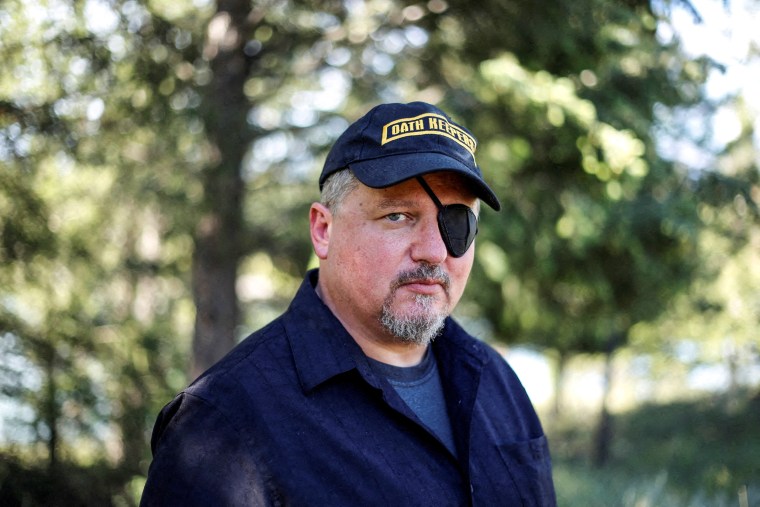
Image: Oath Keepers militia founder Stewart Rhodes poses during an interview session in Eureka, Mont., on June 20, 2016.
Oath Keepers founder Stewart Rhodes during an interview session in Eureka, Mont., on June 20, 2016.Jim Urquhart / Reuters file


According to one of his attorneys, the United States Marshals Service holds Elmer Stewart Rhodes III, who is now in custody in the Cimarron Correctional Facility in Cushing. Rhodes appeared virtually before the House committee on the Cimarron Correctional Facility. The detention institution is under contract with the United States Marshals Service, transferring Rhodes to the Federal Detention Center in Washington, D.C.
According to his attorney, Jonathan Moseley, Rhodes claimed his Fifth Amendment rights between 20 and 30 times but ended up talking for an extended period about the history of the Oath Keepers instead.
Moseley, a Virginia-based attorney whose other clients have included Kelly Meggs, Zach Rehl, a member of the Proud Boys, and other January 6 defendants, said the committee allowed Rhodes to “talk very freely” about the history of the organization. However, his attorneys prevented him from answering questions that could affect his criminal case. Rhodes is charged with conspiracy to commit murder and other crimes.
As long as they weren’t particular to November, December 2020, or January 2021, Moseley stated, “A lot of things about what they do and how they do it were discussed, as long as they weren’t specific to November, December 2020, or January 2021,” “He gave examples of how they operate and what they do,” said the author.
The ex-wife of the commander of the Oath Keepers claimed that he was “fulfilling his own narrative.”
Initially, the committee asked a series of “test questions” to determine what Rhodes would and would not share, according to Moseley. Still, it ended up asking “a lot of questions about the Oath Keepers that he was able to answer,” which Rhodes was able to answer, according to Moseley. Additionally, Kellye SoRelle, who took over as interim leader of the Oath Keepers when Rhodes was jailed last month, appeared before the committee on January 6.
According to Moseley, “I’m sure they were most interested in the stuff that criminal lawyers wouldn’t let him answer,” including communications with other groups such as the Proud Boys, contacts with key figures in former President Donald Trump’s orbit, and fundraising for events scheduled for January 6, among other things.
A request for comment from a committee representative did not respond instantly.
One of the committee’s aides recently said that the panel had heard testimony from more than 475 witnesses and had acquired more than 60,000 pages of documents as part of its probe.
Moseley said that Rhodes had previously promised to assist the committee to the extent that he was able before he was indicted by a federal grand jury in the District of Columbia. Additionally, he claimed that Rhodes talked about his previous work with the Oath Keepers during the interview and that Rhodes became emotional when he told him about how members of the organization helped to secure a shop in Ferguson, Missouri, amid unrest after the killing of Michael Brown in 2014.
Federal prosecutors allege that Rhodes is the mastermind of a criminal conspiracy aimed at maintaining Trump in power despite the election of Joe Biden as the next president of the United States. In his statement to the other defendants, prosecutors claim, Rhodes said that there was “no standard political or legal way out of this,” and that they should be prepared for the worst-case scenario.
The United States Marshals Service is now in the custody of Elmer Stewart Rhodes III. According to his attorney, Jonathan Moseley, he asserted his Fifth Amendment rights between 20 and 30 times. Rhodes was stopped from answering questions that may have impacted his criminal prosecution by his counsel. They questioned him about contact with other organizations, such as the Proud Boys, and funding for the activities on January 6, among other things. In its inquiry, the panel heard testimony from more than 475 witnesses and acquired more than 60,000 pages of documents. Individuals should be aware that everything we do or say on the internet leaves a technical imprint on the world.

Reference

Oath Keepers founder spent six hours on Zoom with January 6 panel. https://www.nbcnews.com/politics/congress/oath-keepers-founder-spent-six-hours-zoom-jan-6-panel-rcna14667?fbclid=IwAR2hlUnUijt4xSgzpMDBufVR0d6iT7LP2ayOBII-JY8eU_LwKZSrq4j9eLk

United States Supreme Court will hear arguments

Amy and David Carson desired that their daughter Olivia attend Bangor Christian Schools, a private religious elementary through secondary school. Maine has said that it would not subsidize religious education. The United States Supreme Court will hear arguments on whether the state violated the Carsons’ constitutional rights. Carson v. Makin is the most recent in a series of lawsuits petitioning the Supreme Court for a ruling on religious liberty. If the court decides widely, it might have a profound effect on the ability of religious organizations to receive public financing.

Getty Images (2); TIME


It has the potential to “eviscerate” rules prohibiting public sponsorship of religious education. Maine parents have filed a lawsuit against the state for failing to include their favorite schools in a tuition aid program. Plaintiffs and supporters contend that the state discriminates against religious individuals. The case follows a series of previous judgments on public support for religious organizations. The case sets the free exercise provision of the First Amendment against the establishment clause.
According to some legal experts, Carson v. Makin is likely to become an extension of Espinoza. Officials in Maine assert that religious schools do not give an education “equivalent to a public education.” Carson v. Maine calls into question the relationship between religious liberty and LGBTQ rights. Maine contends that Bangor Christian and Temple Academy in Maine discriminate against members of other faiths and instructors and students who identify as LGBTQ. Advocates fear that government money may flow to discriminatory schools if the plaintiffs win.
Maine is just a few states that give this kind of tuition assistance to pupils who live in areas without public school choice. However, experts are concerned that other states may experience similar pressure from religious groups to implement similar schemes. This possibility concerns Americans United for the Separation of Church and State.

Reference

This Supreme Court Case Could Take a ‘Wrecking Ball’ to Separation of Church and State.https://time.com/6125676/maine-religion-schools-supreme-court-carson-makin/?fbclid=IwAR2y4KzyfGY6NuggKM8mZIgYpKYuhD_YqmKoiKzgnDJ7WUKGTBkFzCmgyW8

March on Washington for Voting Rights

Voting rights are essential for all individuals. The March on Washington for Voting Rights commemorated the 58th anniversary of the March on Washington. Marchers are urging Congress to enact voting-rights legislation to halt the implementation of restrictive voting laws in states around the country. The John Lewis Voting Act would reinstate the 1965 Voting Rights Act’s pre-clearance provisions, lower in the 2013 Supreme Court case Shelby County v. Holder. The Rev. Al Sharpton, one of the march’s organizers, contended that the filibuster could not obstruct progress. Democrats currently dominate the Senate but have been unable to overcome filibusters on voting-rights legislation.

Washington march voting rights
With the Washington Monument in the background, the Rev. Al Sharpton, center, holds a banner with Martin Luther King, III, and Democratic Reps. Sheila Jackson Lee and Al Green of Texas, during the march to call for sweeping protections against a further erosion of the Voting Rights Act of 1965 on August 28, 2021. AP Photo/Jose Luis Magana


To enact voting rights legislation, moderate senators have resisted attempts to weaken or remove the filibuster. The organizers planned to bring attention to problems such as reparations for slave descendants and a $15 minimum wage. The march was led by New York Rep. Mondaire Jones, who has advocated for the filibuster’s removal.

Reference
‘Old battles have become new again’: Thousands march in Washington, DC, and across the US to push for voting-rights legislation. https://www.businessinsider.com/march-voting-rights-legislation-washington-dc-cities-filibuster-2021-8

India International Spiritual Art Festival in Coimbatore

At the ongoing India International Spiritual Art Festival in Coimbatore, a replica of the Nettipattam, a golden mask used to ornament elephants’ foreheads during temple celebrations in Kerala, is displayed in a sparkling and colorful version. As well as an ethnographic nettipattam created by artist Shobha Prem utilizing gold-plated fiber domes, various other exhibitions take center stage during the virtual event (https://SpiritualArtFestival.org/) that will continue for 100 days until November 8, 2021.

From glittering ‘nettipattams’ and crochet art to sculptures, this 100-day virtual exhibition has it all

The exhibition features artworks and sculptures by over 70 artists from India, Poland, South Africa, and Oman, all of whom are inspired by the themes of meditation, awakening, spirituality, knowledge, and inner calm. Vernika Singh’s beautiful sculptures, constructed of aluminum and mild steel, depict humans in Surya-namaskar poses, with the postures, motions, and gestures of the practice highlighted. The bare figures, which are more concerned with the anatomy than face features, quickly capture the viewer’s attention. In Pune, Manasa Priya creates crochet art inspired by children, and Kuppaana Kandgal’s oil paintings include peaceful textures reminiscent of nature. Ishrath Humairah produces fascinating landscapes in abstract textures based on rocks, plants, and the natural world. Her work is exhibited internationally. Finally, Mauli Shah’s kaleidoscope series, painted in watercolors, reflects the banality of everyday life.

According to Blake Willis, a professor of anthropology and education at Fielding Graduate University in California who spoke in a video message on the website, “the art show is an expression of emotions including love, compassion, enlightenment, knowledge, sisterhood, brotherhood, forgiveness, and more.” “It provides deserving artists with a worldwide platform to display their work,” says the curator. We are looking forward to taking in the artwork and learning about the people who created it.”

In addition to being the festival’s director, Kalki Subramaniam is also a transgender activist and novelist. She says the festival promotes emerging artists, with one Delhi-based artist selling five works in a week. “During a pandemic, spiritual power is something we can rely on to keep our cool,” she continues, adding that.

Gautam Jhanjee, an artist, residing in Canberra, has pieces on display at the event. His calligraphic art is inspired by the diverse cultures of his hometown and Maharashtrian and Punjabi influences from India, Oman, Germany, the United Kingdom, and Australia, among other places. Artist Bridget Paul Shibu, who co-curated the event with Kalki, explains that the focus is on lesser-known artists and their experiments with various media in this exhibition. “Muthiah Kasi from Auroville adheres to the use of ethnic, non-toxic earth colors in his creations. Nandkumar Yashwant Kulaye, a Mumbai-based artist, creates abstract constructions out of wood, metal, fiberglass, and sandstone, among other materials. “The show has opened my eyes,” says the actor.

Reference

India International Spiritual Art Festival explores inner peace,https://www.thehindu.com/entertainment/art/india-international-spiritual-art-festival-explores-inner-peace/article36076436.ece1/photo/1/

Amid COVID-19, Generation Z Activists Unite Against Racism and Mental Health

In his 2017 song “American Teen,” Khalid bemoaned that young people “don’t always express what they mean.” However, following a school year marred by the epidemic, young people speak frankly about issues ranging from racism to their mental health.

Pandemic as a chance

The virtual meetings, which were covered by high school and college students affiliated with the journalism education charity Urban Health Media Project, provided insight into the state of American teenagers who had endured an emotional roller coaster over the last year.

At a Staten Island session, student speakers discussed mental health and racial justice – in part because the two are inextricably linked.

“Racism is a mental health concern because it results in trauma,” said Curtis High School senior Qawiyat Adesina.

“Organizing burns us out,” said Janelle Astorga-Ramos, co-founded an Albuquerque student advocacy group in 2015.

What is the next step?

As the panel talks came to a close, Azariah Estes, a junior at Ritenour High School in St. Louis, stated that one question was “floating about – ‘What next?'”.

There were numerous suggestions.

They include forming high school groups devoted to specific problems and joining community organizations that do the same.

In St. Louis, these measures include increasing the number of licensed therapists in schools, requiring a parent or guardian to attend all school safety discussions, creating “calm rooms” for students to center themselves, and having school safety officers – many of whom are former cops – dress in plainclothes rather than uniform.

“It only takes one person,” Wells explained, “but it is that individual’s responsibility to recruit 200 others.”

Whatever their ambitions, the students agreed that communication was necessary, particularly about frequently taboo topics, such as mental health. South Carolina students stated that they had witnessed an upsurge in teenage suicides and attempted suicides, but the issue is rarely mentioned. “It’s tragic that it takes so many people dying to bring up the subject,” said Elly Tate, an eighth-grader at Gaffney’s Ewing Middle School.

Reference
Kylie Jenner hugs Caitlyn Jenner and Sophia Hutchins amid …. https://www.dailymail.co.uk/tvshowbiz/article-6789965/Kylie-Jenner-hugs-Caitlyn-Jenner-Sophia-Hutchins-amid-turbulent-weeks.html.

Sophia Garcia, Sreehitha Gandluri, Rick Hampson, and Radiah Jamil,I am not alone’: Gen Z activists unite amid the COVID pandemic to confront racism and mental health. https://www.usatoday.com/story/news/education/2021/08/23/gen-z-covid-racism-mental-health-americas-promise-alliance/8204322002/

Judicial aspect of race in the America

Judicial Aspects of Race in the United States: A Nation Fighting for Minority Rights by [Kenneth Dantzler Corbin]
New book on Amazon

This book is about the Judicial aspect of race in the America. In the United States, legislation aimed at regulating interactions between racial or ethnic groups has grown through various historical periods, beginning with European colonization of the Americas, the triangular slave trade, and the American Indian Wars. Racial legislation has been linked to immigration laws, which have sometimes contained explicit clauses targeting certain nations or ethnic groups, such as the Chinese Exclusion Act and the 1923 US Supreme Court decision the United States v. Bhagat Singh Thind. In the antebellum period, all slave states and a few free states enacted similar legislation. Ozawa v. the United States and the United States v. Bhagat Singh Thind are the two most notable instances. Takao Ozawa, born in Japan and lived in the United States for 20 years, sought citizenship but was rejected because he was not deemed white. Americans of Italian and German ancestry and Italian and German citizens were also imprisoned, although on a far lesser scale, even though Italy and Germany sided with Japan in the war against the United States. In 1954, in Hernandez v. Texas, a federal court determined that Mexican Americans and all other ethnic or “racial groups” in the United States may have equal protection under the 14th Amendment.

Improve your overall well-being

Approved activities, such as exercise or writing in a journal, can be very safe and beneficial in the morning. You may have a subconscious illusion that completing your morning routine will improve your overall well-being, so you complete it, or you can stop now, Alison Nobrega said. You need to set aside time in the mornings to get your children washed, fed, and ready for school. You can value 30 minutes of extra sleep in the morning before getting ready for work, even if you do not have children. When you get out of bed, snoozing leaves you tired. Many experts would inform you that getting into the habit of writing in the morning is beneficial, and this is real. As a daily routine, forcing yourself to do this first thing in the morning will not suit everybody.

Reference

6 Morning Habits That Seem Healthy But Are Secretly Stressing You Out. https://www.huffpost.com/entry/morning-habits-healthy-stress_l_60a689c3e4b0a24c4f795c34

Southern Indian states have declared a state of emergency

Two southern Indian states have declared a state of emergency, as coronavirus cases spread at a breakneck pace through the country and pressure increases on Prime Minister Narendra Modi’s government to enforce a national shutdown.


Bengaluru, the capital of Karnataka, has the most significant active caseload of any Indian region, with over 300,000 people. However, analysts warn that the worst is yet to come as India’s third-largest city struggles with oxygen scarcity, overcrowded hospitals, and overcrowded crematoriums. The lockout declaration in Tamil Nadu state came after a regular total of over 26,000 cases on Friday.


Since February, infections have risen dramatically in India due to increased viral varieties and government decisions to encourage large crowds to assemble for religious festivals and political rallies.


India recorded 401,078 suspected cases on Saturday, with a record high of 4,187 deaths. In India, there have been over 21.8 million reported infections and almost 240,000 deaths. Also, such drastic tolls, according to experts, are under-counted.
As his hospital strained to find more air, one doctor in Bengaluru said he had to refuse patients “left, right, and center.”


“The issue is that the demand is so high that we require continuous oxygen,” said Dr. Sanjay Gururaj, medical director at Shanti Hospital and Research Center. The hospital sends a vehicle twice a day to oxygen plants on the city’s outskirts to retrieve 12 jumbo oxygen cylinders. “This would have lasted over two weeks; now, it lasts just over a day,” he said.


The state’s oxygen scarcity led the Supreme Court to ask the federal government to raise the amount of liquid medical oxygen sent to Karnataka. The decision came after 24 virus patients died on Monday in a government hospital. It is unknown how many of them perished because of the shortage of oxygen, but an inquiry is underway.


So far, Modi has delegated liability for combating the virus in this latest outbreak to under-resourced state governments, and he has been accused of doing very little. His government has responded that it is doing everything possible in the face of a “once-in-a-century crisis.” Meanwhile, many medical professionals, minority politicians, and even Supreme Court justices are pressing for nationwide bans, claiming that a patchwork of state regulations is inadequate to increase infections.
Experts warn that the surge in Bengaluru is outpacing that of other hard-hit cities such as the capital, New Delhi, and Mumbai. According to Murad Banaji, a mathematician modeling COVID-19 development in India, cases have increased 100-fold since February, citing official numbers. Test positivity has risen to over 30%, showing that the virus is much more severe than reported estimates, he said.
“Disaster was looming by early March when cases rose,” he said. “Bangalore is more than a ticking time bomb — it is amid an explosion.” Bengaluru was classified as Bangalore.


In recent weeks, Northern India, headed by New Delhi, has received much attention, with news channels broadcasting pictures of patients lying on stretchers outside hospitals and mass funeral pyres that flame all night.
The crisis in Karnataka has drawn attention to other southern states dealing with an increase in incidents. In Andhra Pradesh, daily cases have surpassed 20,000 for the past three days, prompting the state to impose new restrictions.

Kerala, which served as a model for dealing with the pandemic last year, went into lockdown on Saturday. With chronic cases exceeding 40,000, the state is increasing money, including turning hundreds of industrial oxygen cylinders into medical oxygen, according to Dr. Amar Fetle, the state’s COVID-19 officer.


“The magnitude of cases from last year to now is different,” he said, noting that rising figures have resulted in further hospitalizations and increased demand on health-care services, with hospitals complete. “It has turned into a race between occupancy and how quickly we can add beds. We are doing everything we can to remain ahead of the virus.”


Infections are on the rise in the southern area, but there has been “less visible outcry” than in the north due to improved health facilities and government programs addressing issues at the neighborhood level, according to Jacob John, professor of community medicine at Christian Medical College, Vellore.


However, as the epidemic has ravaged major cities in waves, smaller towns and communities with tiny links to health services are also at risk.


“These places are becoming affected, which suggests that we may not have seen the worst yet in south India,” he added.


Reference
India’s surge hits southern states, prompts more lockdowns. https://apnews.com/article/india-religion-coronavirus-pandemic-health-18d61c7956cb0bf9f59d975a5f171875