Tag Archives: Alzheimer’s disease

The Surprising Link Between Dental Health and Brain Function

Introduction

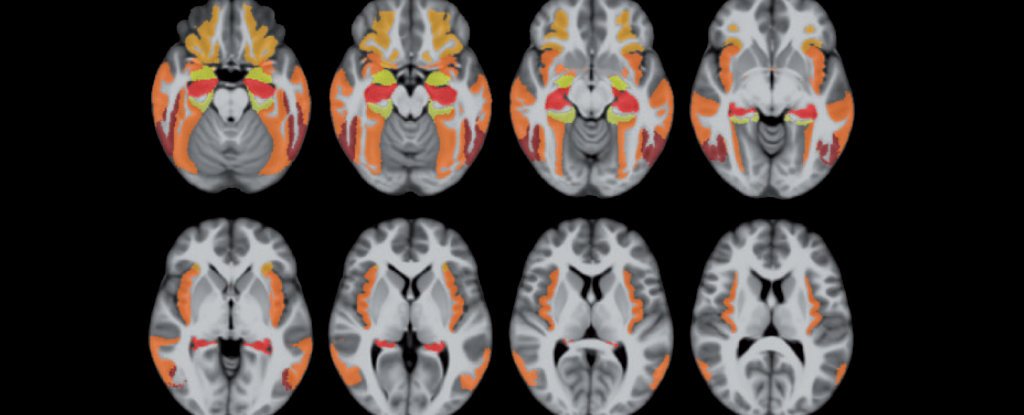
From a young age, we have always been told to take care of our teeth for oral health and to avoid tooth loss as we grow older. However, recent research from Japan suggests that the consequences of poor dental hygiene go beyond just gum health – they may also impact our brains. Scientists have discovered a correlation between tooth loss, gum disease, and shrinkage in the hippocampus, a brain region associated with memory and Alzheimer’s disease. These findings raise important considerations about preserving not only gum health but also brain health.

The Study and Its Implications

One hundred seventy-two participants who were 55 or older participated in the study by researchers at Tohoku University in Japan. At the beginning of the study, the participants underwent memory tests, and data on their general health and medical history were collected. Magnetic resonance imaging (MRI) scans were performed to measure the hippocampus volume at the start of the study and four years later.

Dentists counted the number of teeth and examined periodontal probing depth (PD) to assess gum disease. According to the researchers, the number of teeth and the severity of gum disease affected the volume of the left hippocampus. Individuals with mild gum disease and fewer teeth experienced faster shrinkage in the left hippocampus. Surprisingly, one less tooth was found to increase the rate of brain shrinkage in people with mild gum disease, comparable to an additional year of brain aging.

On the other hand, individuals with severe gum disease and more teeth showed a faster rate of brain shrinkage in the same region. An additional tooth in those with severe gum disease led to left hippocampus shrinkage equivalent to 1.3 years of brain aging.

Promoting Dental Health for Cognitive Well-being

While this study does not establish a causal relationship, it highlights the significance of oral health in relation to cognitive function. Dentists and healthcare professionals must consider the potential impact of dental health on brain health when making critical decisions about patients’ oral care. It also emphasizes the importance of regular dental visits and proper management of gum disease.

Although the study had a small sample size and focused on one region, further research on more extensive and diverse populations is necessary to generalize the results. Nonetheless, it serves as a reminder that maintaining good dental hygiene is crucial for oral health and cognitive well-being.

Conclusion

The link between dental health and brain function adds a new dimension to our understanding of the importance of oral care. Tooth loss and gum disease have been associated with changes in the hippocampus, a brain region essential for memory and impacted by Alzheimer’s disease. While more research is needed to establish the causal relationship, these findings emphasize the need to prioritize dental health to preserve our smiles and cognitive abilities. So, next time you brush your teeth, remember that you are caring not just for your gums but also for your brain.

Cited Works
Li, Q., Ye, H., Ding, Y., Chen, G., Liu, Z., Xu, J., Chen, R., & Yang, H. (2017). Clinical characteristics of moderate-to-severe thyroid-associated ophthalmopathy in 354 Chinese cases. PLoS One, 12(5), e0176064.

Why we champion the role of the dental hygienist in south-west London?. https://www.dentistsw4.com/latest-news/why-we-champion-the-role-of-the-dental-hygienist-at-our-south-west-london-practice/

JCI Insight – Exploring the cardiac response to injury in heart transplant biopsies. https://insight.jci.org/articles/view/123674
You might not have known this, but a study called “Landmark” found that people who smoke are more likely to get Alzheimer’s.

The biggest Alzheimer’s study ever finds new genes and pathways involved in disease progression.

silhouette of a person showing internal nervous system and brain on a blue background surrounded by dna

CREDIT: GETTY IMAGES

The groundbreaking study’s findings imply physicians can better anticipate whether a patient is genetically prone to Alzheimer’s. Alzheimer’s disease affects over 5.8 million Americans. Researchers from France’s Université de Lille performed the study. A genetic risk score may help determine who is most likely to develop Alzheimer’s.

To better understand Alzheimer’s and create medicines that delay or prevent the disease start, the research represents a huge step forward. The next stage is for researchers to concentrate on the study’s risk genes and their influence in brain cell malfunction and death.

Scientists have finally nailed down one link between brain health and the “polar bear plunge.”

After many years of anecdotal evidence, scientists have finally nailed down one link between brain health and the “polar bear plunge.”

In a study associated with the #blood profiles of regular winter-time swimmers in London, Cambridge University researchers have identified a protein which was shown to slow the onset of #dementia in mice — and even repair a number of the damage brought on by the illness.

Their findings hinted at an explanation as to why hibernating animals, who lose 20% to 30% of these synapses during the cold winter to preserve energy, can regenerate those neural connections upon awakening in the spring.
Their findings hinted at a reason as to the reasons hibernating animals, who lose 20% to 30% of these synapses during the cold winter to preserve energy, can regenerate those neural connections upon awakening in the spring. (iStock)

For a long time, doctors have observed the healing and protective advantages of cold environments on individual ill patients but had yet to locate any connection.

If they revealed the role of a specific #protein — the RBM3 — in other mammals, such as bears, the #pathology behind its healing power began falling into place.

HEARING LOSS MAY CAUSE #DEMENTIA, STUDY FINDS

In a 2015 study published in the journal Nature, the Cambridge team discovered “cold-shock chemicals” during animal studies on healthy mice, mice with #Alzheimer’s, yet others with a prion, a neurodegenerative #disease. They observed that whenever healthy mice were placed into a hypothermic state — below 35 degrees Celsius — and then carefully rewarmed, they reap the benefits of a natural boost of RBM3. Once fully reanimated, researchers found the ordinary mice had also healed neurons that were harmed by the first shock.

Mice with Alzheimer’s and prion demonstrated neither effect.

However, in another test, scientists instead artificially increased RBM3 levels in the sick mice, then repeated the “cold-shock” process. This time around, the protein seemed to prevent vulnerable synapses — or cell connectors — from breaking, suggesting that RBM3 might shield the brain from #dementia diseases’ outcomes.

Their findings hinted at a description as to why hibernating animals, who lose 20% to 30% of their synapses during the cold winter to preserve energy, can regenerate those neural connections upon awakening into the spring.

During the time, Professor Giovanna Mallucci, who runs great Britain Dementia Research Institute’s Center at Cambridge, confessed to BBC Radio 4 Today listeners that the breakthrough study may end there as few human subjects would willingly submit themselves to hypothermia.

CORONAVIRUS ISOLATION KILLING A LARGE NUMBER OF ALZHEIMER’S PATIENTS

Those few, however, heeded the call of science. Martin Pate, a swimmer at Parliament Hill Lido in London, an outdoor pool open year-round, got in touch with researchers, volunteering himself and a little set of swimmers through the center — in the end, these were familiar with frigid temperatures.

People in a #Tai Chi group who practice near the pool were enlisted as a control group and not submitted to cold weather.

As researchers suspected, most swimmers, recovering from core temperatures as low as 34 degrees Celsius, showed notably high levels of RBM3 in contrast to the Tai Chi group.

COMMON SENSE OF SMELL MAY INDICATE LOWER RISK OF DEMENTIA IN OLDER ADULTS: STUDY

“If you slowed the progress of dementia by even a few years on an entire population, that could have an enormous impact economically and health-wise,” said Mallucci, who shared her recent, unpublished findings in a live panel on YouTube.

However, researchers cannot recommend ice baths as a safe treatment due to the inherent dangers of swimming in near-freezing temperatures. A “cold-shock” is sufficient to prompt a heart attack or stroke in patients with high blood pressure levels or cause a swimmer to reduce their coordination, resulting in drowning.

Reference
Cold water may be an effective defense against dementia …. https://www.foxnews.com/health/cold-water-may-be-effective-defense-dementia

Blood pressure drugs may help reduce dementia risk

A massive innovative analysis has discovered a connection concerning choosing many classes of blood pressure-lowering medications and a minor risk of dementia amongst senior adults, adding to the conversation about the relationship concerning cognitive deterioration and high blood pressure.

People who take blood pressure-lowering medication may have a lower risk of dementia.

Dementia is an umbrella term for numerous neurodegenerative disorders, the most extensive of which is Alzheimer’s disease.

The critical trait of dementia is progressive cognitive deterioration, in which a person encounters memory loss and degeneration in their reasoning and decision-making capabilities.

Scientists are still ambiguous as to what causes dementia, but in an attempt to progress prevention stratagems, they have been examining the possible danger causes that may be a factor to the progress of this condition.

Various current studies have connected hypertension with an advanced risk of dementia. For example, a paper that appeared in the journal Neurology last year found that hypertension is coupled to a higher risk of suffering brain lesions, which are, in turn, attached to dementia.

Reference

May | 2019 | My CMS | Page 40. https://www.medicationjunction.com/2019/05/page/40/


Ways to Prevent Dementia

The World Health Organization (WHO) shows that close to 50 million men and women globally currently have dementia. Dementia is actually a ailment seen as problematic that affects the memory, thinking, and performing daily task.. As for its causes, Alzheimer’s disease is a common disease in the United States that causes dementia and is the leading cause of death. Though currently the WHO orgranization put out new guidelines the guidelines consists of speciafic step for lowering the risk of cognitive problems while dementia is common in seniors the WHO organization points out that this procecss is a part of aging but we can make lifestyle changes earlier this prevention may curb the on-set of dementia.

  1. Exercize regularly
  2. Stop smothing
  3. Avoid heavy Alcohol consumption
  4. Control weight
  5. Eat a healthy diet
  6. Maintaining healthy blood pressure, cholesterol, and blood sugar levels

The great thing is a number of these recommendations are linked. Meaning if you start working out more frequently and consuming a healthier diet regime, there is an excellent possibility that will favorably effect unwanted weight and heart wellness. Main point here, it’s worth your money a head start, regardless of what that appears to be, on supporting the human brain wellness for the many years to come.

There is a common brain disease that looks like Alzheimer’s but it is not!

For numerous seniors who are clinically determined to have Alzheimer’s disease. A definite type of late-occurring dementia known as LATE may be the source of their state. The issue is, informing the two apart is far from easy. Though, recently publicized recommendations may help health professionals differentiate both conditions, providing individuals with either of the medical conditions, a much better diagnosis of their foreseeable future, while promoting understanding of different types of dementia.

With so much concentration on Alzheimer’s recently, it’s not hard to neglect there are additional neurodegenerative medical conditions to look out for.

Many are relatively simple to recognize depending on patient background, numerous biomarkers, or distinctive signs of illness.

One specific type of dementia known as limbic-predominant age-related TDP-43 encephalopathy – or LATE – acts uncannily like Alzheimer’s disease, rendering lots of chance for misinformed diagnostic classification. However, dementia is set to be an increasing challenge in a world with an maturing populace; an illness that may be demonstrating much more complicated when compared with the first. Unraveling that difficulty is actually a required step in choosing the best intervention to help patients