Category Archives: disease

Vitamin D may reduce the risk of developing cardiovascular disease

Vitamin D may reduce the risk of developing cardiovascular disease and cancer. However, few large, higher-quality randomized controlled trials (RCTs) have been conducted to corroborate this. A recent RCT examined the effects of vitamin D supplementation in Finland. It found no association between vitamin D and reduced risk of cardiovascular disease or cancer. There is evidence that vitamin D deficiency is associated with nearly all primary chronic conditions, such as cardiovascular disease, cancer, type 2 diabetes, and mortality.

It looked at data from 2,495 people, including those with no cardiovascular disease or cancer history. To provide further evidence of the relationship between vitamin D, cardiovascular disease, and cancer, the researchers behind the present study conducted the Finnish Vitamin D Trial. Despite the large doses, the study failed to see any effect of the supplementation on lowering the incidence of [cardiovascular disease] and cancer. Those who might benefit from the vitamin D supplementation — i.e., those with low serum vitamin D levels — are a small minority in the trials. Prof. Karani: “High-dose vitamin D supplementation may modestly reduce the risk of cancer death, but not overall cancer incidence.” Dr. Virtanen states, So far, there is no evidence that [Vitamin D] supplementation could prevent [SARS-CoV-2] infection. Still, it is well-documented that those, especially with the severe form of COVID-19, have low serum vitamin D levels.

It is also possible that this is a consequence of the [SARS-CoV-2] infection rather than the cause because it is known that acute infection leads to lower serum vitamin D levels. In addition, many of the COVID-19 patients are overweight or obese or have a chronic disease like type 2 diabetes, which is associated with lower serum vitamin D levels, explained Dr. Virtanen. “It is challenging to obtain vitamin D from food intake alone unless that food is fortified with vitamin D. It would be essential to explore whether vitamin D supplementation can decrease the incidence of [cardiovascular disease] and cancers, as that would make a strong case for mandatory vitamin D fortification or promotion of fortified foods in the population.

Reference

Vitamin D supplements, heart health, and cancer risk. https://www.medicalnewstoday.com/articles/vitamin-d-supplements-heart-health-and-cancer-risk?fbclid=IwAR0anIA4BSbVWh-5gq1EcPeh0-2HN8CGkxNh4ZlnIESqCqFndScGFYXPraE

Fast-spreading Omicron variant

A fast-spreading Omicron variant that causes milder illness compared with previous versions of the coronavirus has fueled the view that COVID-19 poses less of a risk than in the past. For those who do have symptoms, a higher proportion experience very mild illness, such as the sore throat or runny nose without the breathing difficulties typical of earlier infections.

Covid-19 Testing

Omicron is the fifth highly significant variant of the original SARS-COV-2, and it remains to be seen if the ability of the virus to mutate further will slow down. In fully vaccinated and boosted individuals without underlying medical conditions, Omicron “will not do too much damage,” said David Ho, professor of microbiology and immunology at Columbia University.

Reference

Explainer: Why you should still try to avoid catching Omicron. https://www.reuters.com/business/healthcare-pharmaceuticals/why-you-should-still-try-avoid-catching-omicron-2022-01-12/?fbclid=IwAR3Wu9sI6Yum4sL57_fv9qsSfqqGk6meKH7GIdZ2fc_GofHdUpGV9jQ7peo

Omicron-specific vaccination

According to the Centers for Disease Control and Prevention, Omicron accounted for more than 95% of all new cases in the United States last week. The representative verified that the production of doses of the Omicron-specific vaccination has already commenced. Symptoms of COVID-19 and the Omicron variant: Recent investigations indicate that Moderna Pharmaceuticals is working on an Omicron-specific variant vaccination. Moderna anticipates initiating advanced clinical studies for the vaccine early this year but did not say when. Dr. Anthony Fauci, the White House’s senior medical advisor, has recommended that Americans obtain booster injections, which are 75% effective at avoiding symptomatic COVID-19 infection.
Stéphane Bancel, CEO of the pharmaceutical company Moderna, said last week that he expects the current vaccine’s protection to fade. Moderna said on Monday in a website update that although the pharmaceutical company’s first line of defense against Omicron is a third dosage of its current vaccine, it is also creating an Omicron-specific booster injection.
Reference
Pfizer says its vaccine targeting Omicron will be ready in March. https://www.cbsnews.com/news/covid-vaccine-pfizer-omicron-variant-march/?fbclid=IwAR2AnmzLdZ_7a62wM76ClL4T8z0oQbad3cuHbuuqSLvSRSxV6SB6Ib1VSS4

Worldwide about a possibly more transmissible version of the coronavirus

Concerns are growing worldwide about a possibly more transmissible version of the coronavirus that causes COVID-19. As fresh instances are verified, scientists are scrambling to learn more. President Biden said that the mutation is “cause for concern, not a cause for panic” California verified the first case in the United States; omicron has been discovered in 16 states. In three days, the number of new coronavirus cases in South Africa has tripled.
The positive rate for Omicron increased from 1% in early November to 22.4 percent on December 2. The omicron version most likely acquired genetic material from a human virus that causes the common cold. A public health expert argues it is “premature to panic” over the mutation, which the World Health Organization has designated (WHO). Public health authorities in the United States are redoubling their efforts to distribute immunizations to everyone, including boosters for people who have previously been vaccinated. Within 100 days, Pfizer and BioNTech plan to have a “tailor-made vaccine” for the variation.
Each time the virus crosses between persons, it might undergo several genetic alterations. According to public health specialists, there is a strong likelihood that the new type has already spread to a number of nations beyond those where cases have been recorded. Public health professionals are advising the public not to make hasty judgments. Certain initiatives are already being scrapped in the aftermath of Omicron. Google said that it would delay its required in-office work beginning Jan. 10 for the length of the epidemic. Additionally, Rio de Janeiro’s mayor suspended the city’s New Year’s Eve event.

Reference

What to know about the omicron variant of the coronavirus. https://www.washingtonpost.com/health/2021/11/26/faq-new-variant-omicron/

Warning about the Johnson & Johnson

The Food and Drug Administration has issued a fresh warning about the Johnson & Johnson coronavirus vaccination. The majority of the instances are recorded within two weeks after vaccination, and the majority of the victims are males over the age of 50. The administration’s attempts to increase vaccinations in places where skepticism about coronavirus vaccines is strong and the vaccination rate is low might be hampered by the new warning.

According to a frequently asked question (FAQ), 60 to 120 cases of Guillain-Barré syndrome occur at a rate of 60 to 120 cases each week. According to reports, Johnson & Johnson’s vaccine has been linked to a rare but “likely indicates a small possible risk” sickness. An early warning safety network established by the CDC and FDA was alerted to the syndrome after reports were filed with the Vaccine Adverse Events Reporting System (VAERS). A doctor warns that the United States’ immunization efforts have “hit a brick wall.”He argues that the government should force vaccinations.

Vaccines manufactured by Pfizer and Moderna are now required by the FDA to include a warning about the dangers of coronavirus. Due to the difficulties at Johnson & Johnson’s Baltimore factory, approximately 75 million doses of the vaccine were thrown away. Pfizer and Moderna vaccines are recommended for people 12 and older since the benefits of immunization substantially exceed the risks. A Boston man who got the Johnson & Johnson vaccination was the subject of a similar instance recounted in an editorial that appeared with the article.

Flu vaccination doses have regularly resulted in one or two more illnesses per 1 million doses delivered when there was an elevated risk. According to the group, there were examples of significant facial paralysis in the patients from England and India. Vaccine safety experts in Europe have advised that the AstraZeneca vaccine include a warning for Guillain-Barré.

Reference

FDA adds new warning on Johnson & Johnson vaccine related to rare autoimmune disorder. https://www.washingtonpost.com/health/2021/07/12/johnson-and-johnson-warning/

Omicron is a novel coronavirus strain

Omicron is a novel coronavirus strain with a high number of alarming mutations. Scientists are trying to determine how transmissible and vaccine-resistant this strain is. Examining a virus’s genetic coding is a critical tool for scientists when deducing the genesis of a viral strain. The closest sequences to Omicron are from mid-2020 – more than a year ago. Nonetheless, its alterations distance it significantly from the 2020 strain.

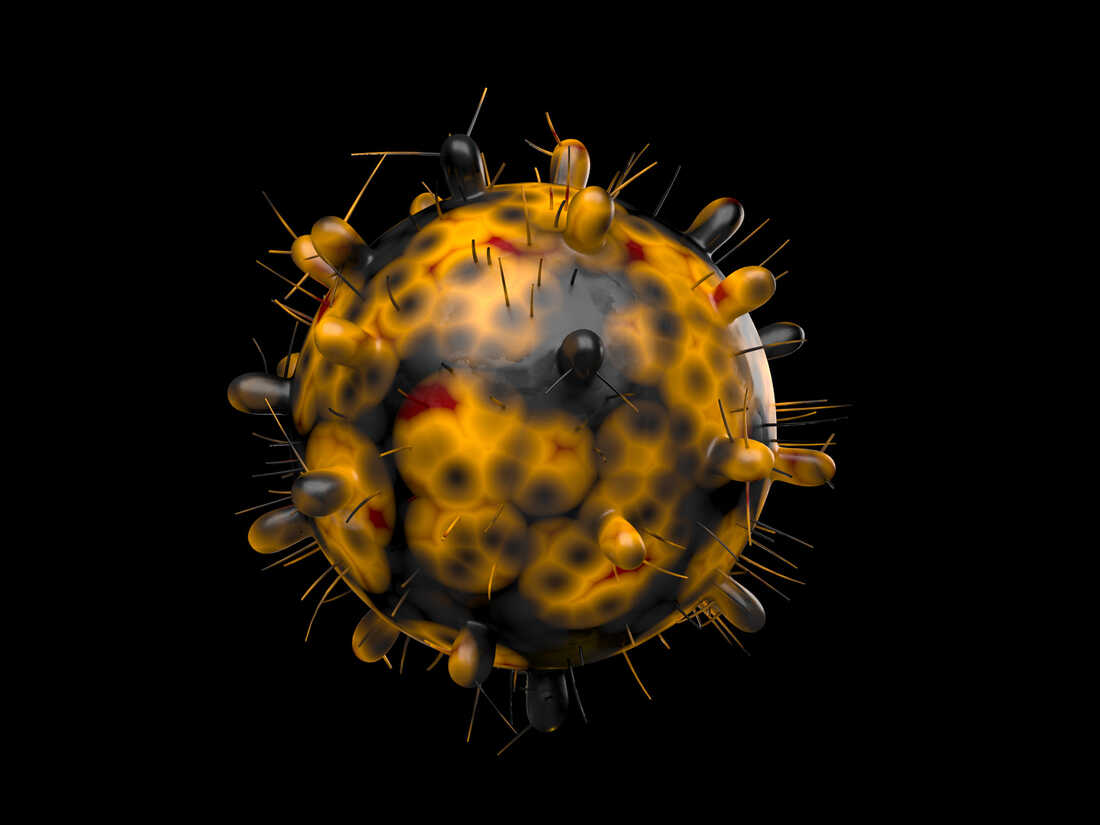
Here’s a computer generated image of the omicron variant of the coronavirus — also known as B.1.1.529. Reported in South Africa on Nov. 24, this variant has a large number of mutations, some of which are concerning.
Uma Shankar sharma/Getty Images

Because it seems as if [this strain of the virus] was on the verge of becoming omicron and therefore a highly transmissible virus, [previous versions] would have begun to spread more broadly prior to now. On the one hand, he acknowledges that there are undoubtedly places in Africa where coronavirus sampling has been limited. Each time it replicates, it has a chance of acquiring a mutation that improves its ability to evade the person’s antibody-producing immune cells. Thus, it would take a really large blind spot to miss something that is truly changing over months, according to main researcher David Bedford. Indeed, it was this warning signal that caused a private laboratory to notify Lessells and his colleagues last month, allowing them to sequence the samples containing omicron. “If you have representative sequencing and frequent sequencing, and you are quick enough to react to what you see in the diagnostic laboratory, you may detect these mutations at an early stage,” he adds. In such cases, Bedford argues, the individual’s immune system is still robust enough to ward off the coronavirus. Due to the fact that we had samples from many different time periods throughout that six-month period, Lessells explains, we were able to demonstrate how the virus developed and how variants with some of the same mutations as the variations of concern occurred in the samples over time.

He does not have an apparent solution other than chance, according to co-discoverer of Omicron David Bedford. Nonetheless, Bedford notes that in the near run, making informed predictions about the origin of omicron can help determine how seriously to take the variant’s danger. For example, he asserts that if omicron evolved invisibly in a vast population of people over a period of months, this indicates that it is not very transmissible. However, they assert that its development serves as another warning that future varieties may be formed as a result of the virus’s mutation. However, he asserts that if omicron evolved in a single person and only recently spread to a larger population, the level of circulation detected now — or, as Bedford puts it, the time frame for reaching the point where we are starting to pick up cases in travelers’ — occurred over a much shorter period. The aim, they assert, is not to blame or stigmatize anyone in this circumstance, but to realize that assisting them is critical to stopping the coronavirus epidemic. And this indicates that the variation is far more transmissible.

Reference

The mystery of where omicron came from — and why it matters. https://www.npr.org/sections/goatsandsoda/2021/12/01/1055803031/the-mystery-of-where-omicron-came-from-and-why-it-matters?fbclid=IwAR1diN84M2YxKJxQ1PZBWwy4Uzh_2LC5ZcG5a5YUrMHYJKHVBriAai5s6sw

Novel antiviral medication for Covid-19

Merck and Ridgeback Biotherapeutics’ Molnupiravir is a novel antiviral medication. If approved by the FDA, it will be the first oral home therapy for COVID-19.

Molnupiravir, an antiviral drug to treat mild to moderate COVID-19, is under consideration by the FDA for possible authorization.
Merck

Molnupiravir, a five-day tablet regimen, looks less effective than monoclonal antibodies. The Pfizer medicine Paxlovid may be more effective. Both tablets inhibit viral replication by targeting certain steps. Concerns about molnupiravir do not immediately relate to Paxlovid, as Pfizer has not yet made its safety data public. Exist any hazards or adverse effects?
Waiting a few days for a test and a few days for findings means the most effective time for these tablets has past.

Will they work against omicron and its variants?
Particular tests pitting the tablets against specific versions are required, say Dieffenbach and Gandhi.

The antiviral medicines target a distinct stage of the virus’ life cycle.

If approved by the FDA, these antiviral tablets might be effective, but stronger antivirals are needed, adds Dieffenbach. “These variations will continue till COVID rates fall,” Gandhi said. Treatments: “They are a back-up.

Reference

New antiviral drugs are coming for COVID. Here’s what you need to know. https://www.npr.org/sections/health-shots/2021/11/30/1059926089/new-antiviral-drugs-are-coming-for-covid-heres-what-you-need-to-know

Individuals tested positive for Covid-19

According to Dutch authorities, 61 individuals who landed in Amsterdam on two planes from South Africa tested positive for Covid-19. Individuals being tested on different flights from South Africa.

The Dutch authorities are doing more testing to see if there are any instances of Omicron, which was declared a variety of concern by the WHO on Friday.

On 24 November, the variation was initially reported to the World Health Organization in South Africa.

By that time, the Dutch authorities had already imposed travel restrictions from the area due to the new variety and arranged for travellers to be tested and quarantined.

The Dutch health authorities said on Saturday that 61 passengers on the planes had tested positive.

The positive test findings will be analyzed immediately to ascertain if they pertain to the new concerning variety, which has been dubbed the Omicron variant, the company stated in a statement.

Anyone who tested positive would be required to stay at a hotel for seven days if they exhibited symptoms and five days if they did not, the statement continued.

According to reports, some passengers have not received formal confirmation of a negative test and hence are unable to board subsequent flights.

Reference

Covid: Dozens test positive on SA-Netherlands flights. https://www.bbc.com/news/world-europe-59442149

What is Your Opinion on the Benefits of Coffee for Alzheimer’s Disease? Here’s What the Latest Research Says About the Link.

In a study evaluating the relationship between coffee and tea consumption and the risk of dementia and stroke, the researchers revealed that a certain number of cups consumed per day had the highest association with a decreased risk.

That is the message from recent research that is generating much attention. The research, published in the journal PLOS Medicine on November 16, assessed data from 365,682 adults aged 50 to 74 who took part in the UK Biobank. (If you are not acquainted with the UK Biobank, it is a large-scale biomedical database and research resource.) The health of the individuals and their coffee and tea consumption habits were monitored for 10 to 14 years.

During the research, 5,079 people got dementia, and 10,053 people had at least one stroke. The researchers examined persons who did not drink coffee or tea to those who did and discovered that those who enjoyed their brewed beverages had a reduced risk of stroke and dementia than abstainers. Those who drank two to three cups of coffee or three to five cups of tea per day had a decreased risk of dementia and stroke. Those who drank two to three cups of coffee and two to three cups of tea per day—so four to six cups of coffee and tea per day—had the most outstanding outcomes, with a 32% reduced risk of stroke and a 28% lower risk of dementia.

“We discovered that consuming coffee and tea individually or together was connected with a decreased risk of stroke and dementia,” the researchers concluded. “Consumption of coffee alone or in conjunction with tea was linked to a decreased incidence of poststroke dementia.”

It is worth noting that the research discovered merely a relationship, not causality. That is, the researchers did not discover that drinking coffee or tea reduces a person’s chance of dementia or stroke; instead, they discovered that persons who consume coffee and tea had a decreased risk of these primary health conditions. Scott Kaiser, MD, a geriatrician and the director of Geriatric Cognitive Health at Providence Saint John’s Health Center in Santa Monica, California, tells health that the correlation vs. causation component is critical. He emphasizes that the research “does not establish that consuming coffee or tea caused this decrease in risk.”

Doctors are still interested. “He is delighted that coffee drinking may reduce my own risk of dementia,” Amit Sachdev, MD, medical director in the Department of Neurology at Michigan State University, tells health.

This is not the first research to discover a correlation between coffee, in particular, and good health. For example, one research of over 468,000 adults, presented in August at the European Society of Cardiology, showed that drinking up to three cups of coffee per day is associated with a decreased risk of stroke and heart disease. In addition, a meta-analysis of 34,282 people’s data published in the journal Clinical Nutrition in 2016 discovered that drinking one or two cups of coffee per day is associated with a decreased risk of dementia.

Of course, there is such a thing as too much of a good thing. For example, research published earlier this year in the journal Nutritional Neuroscience discovered that consuming more than six cups of coffee each day increases your chance of developing dementia.

The “considerable disagreement” around the link between coffee and tea intake and stroke and dementia is one of the reasons the researchers claim they undertook this most recent study.

It is unclear why there could be a relationship between coffee and tea use and dementia and stroke risk—and the new research did not look into this. “While caffeine is undoubtedly a crucial shared denominator,” Dr. Kaiser explains, “coffee and tea are both derived from plants with many, many potentially beneficial chemical components, including strong antioxidants.” Any of these phytonutrients—chemicals produced by plants to maintain their health—”can really lower inflammation in our brains, protect brain cells from damage, improve learning and memory, and give other obvious advantages for brain health,” he continues.

All of this begs the question: Should the individual start drinking coffee or tea if the individuals are not already? Dr. Sachdev does not recommend it. “He is a little doubtful that this research will affect behavior,” he adds. “He would be more interested if a specific chemical in coffee or tea could be discovered.”

However, if one is already a coffee or tea user, individuals will be relieved to discover that the daily habit may be linked to a decreased risk of dementia and stroke.

Reference:

Korin Miller, Can Drinking Coffee Lower Your Dementia Risk? Here’s What New Research Says About the Association, November 17,Health. 2021.https://www.health.com/condition/neurological-disorders/coffee-and-dementia?fbclid=IwAR2DVl54rZI4I3zAbn17ZsGZxWaVD1CbzGXeTZl2e4qmFfIivm83a10yQj0

Did you know that Germany debates imposing tighter rules as infections surge?

Treating Covid-19 patients at a hospital in Leipzig, Germany, on Monday.
Treating Covid-19 patients at a hospital in Leipzig, Germany, on Monday.Credit…Waltraud Grubitzsch/DPA, via Associated Press

On Tuesday, about 40,000 new cases were recorded in the nation. In the 24-hour period, 236 individuals died from the sickness. “They have a true emergency scenario,” says Dr. Christian Drosten. Since the outbreak, Germany has recorded around 97,000 Covid fatalities. On Wednesday, officials in Bavaria announced a state of emergency, citing a 68 percent increase in cases in the past two weeks. Several additional states, particularly those that have been affected the hardest, have enacted or are about to implement stronger laws this week.

For anyone wishing to access specific services, the guidelines would require vaccines or paperwork demonstrating a previous illness. Approximately 67 percent of the population is completely immunized.

Reference

Germany debates imposing tighter rules as infections surge. https://www.nytimes.com/2021/11/10/world/europe/covid-germany-cases.html?fbclid=IwAR2mpFqsz7tIznyEdmYs0VoDbdELk96k3nfBeSpX1vtwzXo9PKRH7GSoSz0