Tag Archives: vegetables

Did you know that the top produce was tainted by pesticides?

Strawberries, spinach, and leafy greens once again topped a list of produce tainted by pesticides, according to an analysis from the Environmental Working Group.
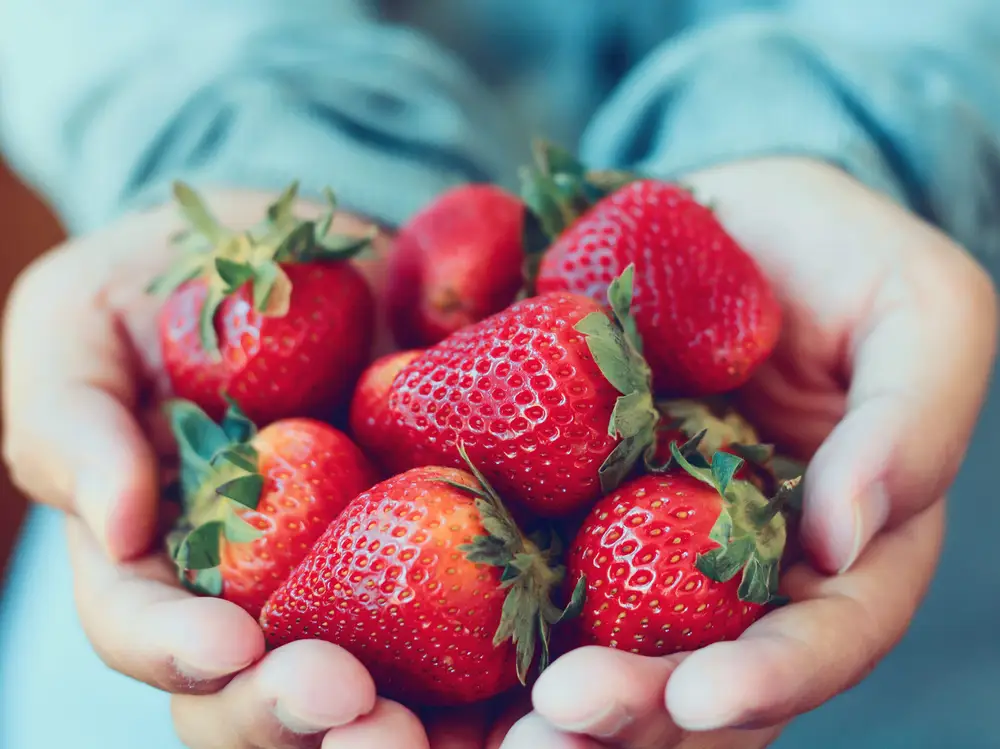
Kwangmoozaa/Getty Images


The Dirty Dozen includes the 12 fruits and vegetables that retain the most pesticide contamination, even after they’re washed and peeled as consumers would prepare them. Updated every year as part of EWG’s Shopper’s Guide, which is based on tests by the USDA and the FDA. Almost 70% of the non-organic produce tested had detectable pesticide residue, usually at levels that fell within the legal limits in the US.
However, just because pesticides are legal does not mean that they are safe. More than a quarter of pesticide use in the US has been linked to chemicals that are illegal in Europe, according to a 2019 study. Those chemicals have been banned due to probable or proven health risks. Because the testers wash and prepare the produce samples before scanning for pesticides, these fruits and vegetables require more than an extra rinse to be rid of toxins. Strawberries and greens topped the Dirty Dozen again. The USDA and FDA do not repeat tests of produce every year, so not much has changed since last year’s Shopper’s Guide was published. For the seventh year in a row, strawberries were found to have the most pesticide contamination of any fruit or vegetable tested. Spinach came in second, followed by kale, collard greens, and mustard greens in third. The rest of the Dirty Dozen includes nectarines, apples, grapes, peppers (bell and hot), cherries, peaches, pears, celery, and tomatoes. The Peppers moved up a couple spots on the list, but aside from that, the standings are the same as last year. Whenever possible, the EWG recommends that people buy organic versions of Dirty Dozen produce, analyst Sydney Swanson said in a press release. Organic farming practices ban the use of most synthetic pesticides, so organic produce is less likely to be contaminated with known toxins. However, not everyone can afford organic produce or have an environmentally-conscious market nearby. If you can’t afford to buy cleaner versions of the Dirty Dozen, EWG experts say that the Clean Fifteen might be a better choice. Avocados, sweetcorn, and pineapple ruled the Clean Fifteen. The Clean Fifteen fruits and vegetables were found to have the lowest levels of pesticide residue of the bunch, with nearly 70 percent of the samples from the list found to be completely pesticide-free. The list includes avocados, sweet corn, and pineapple as the top three “cleanest” fruits and vegetables. Onions, papaya, and frozen sweet peas were next, followed by asparagus, honeydew melon, kiwi, and cabbage. Mushrooms, cantaloupe, mangoes, watermelon, and sweet potatoes also made the list of the least pesticide-contaminated produce. Since last year’s list, the EWG removed broccoli, cauliflower, and eggplant from the Clean Fifteen — not because of new contaminants, but because they hadn’t been tested in six or more years.
Can you believe that millions of deaths may be tied to not eating enough fruits and vegetables?

apples
© andy0man

New research finds that inadequate intake produce may make up for 2.8 million deaths annually.

I will now put on my mother hat and tell you this: Eat your fruits and vegetables.

Here’s why. A new study finds that inadequate intake of produce may make up for 2.8 million deaths, globally, from heart condition and strokes annually. The researchers concluded that low fruit intake resulted in 1.8 million cardiovascular deaths in twenty ten. I believe that not eating enough vegetables resulted in 2 million deaths.” Fruits and vegetables certainly are a modifiable factor of diet that can impact preventable deaths globally,” said lead study author Victoria Miller, a postdoctoral researcher along at the Friedman School of Nutrition Science and Policy at Tufts University. “Our findings indicate the call for population-based efforts to increase fruit and vegetable consumption through the entire world.”

The researchers used data from 2010 and found:

  • Suboptimal fruit consumption generated in nearly 1.3 million deaths from stroke and even more than 520,000 deaths from the disease of the coronary artery.
  • Suboptimal vegetable consumption brought about around 200,000 deaths from stroke and more than 800,000 deaths from the condition of the coronary artery.

For the study, the researchers used dietary guidelines and studies of cardiovascular risk factors to come up with a fruit and vegetable standards, they defined:

Optimal fruit intake: 300 grams per day, equivalent to roughly two small apples. 
Optimal intake of vegetables: Including legumes, 400 grams per day, equivalent to about three cups of raw carrots.

The data they used came from 113 countries, comprising around 82 percent of the world’s population.

Countries in South Asia, East Asia and Sub-Saharan Africa had low fruit intake and high rates of associated stroke deaths. Countries in Central Asia and Oceania had low vegetable intake and high rates of associated coronary heart disease.

The maps below show the percentage of cardiovascular deaths (CVD) attributable to suboptimal vegetable and fruit intake in countries around the world.

fruit map

Global Dietary Database 2010/Friedman School of Nutrition Science & Policy at Tufts University/CC BY 4.0

vegetable map

Global Dietary Database 2010/Friedman School of Nutrition Science & Policy at Tufts University/CC BY 4.0

Perhaps the United States, with all of our relative abundance and free natural resources, did not fare that well. Inside the U.S., avoiding food enough vegetables defined 82,000 cardiovascular deaths while suboptimal fruit was linked to 57,000 deaths regarding the year.

Reference

Millions of deaths tied to not eating enough fruits and vegetables.https://www.treehugger.com/health/millions-cardiovascular-deaths-attributed-not-eating-enough-fruits-and-vegetables.html

Frozen fruits and vegetables may be more healthy

A person is probably mindful that they should try to consume as many fresh fruits and vegetables as one can for good overall health. However, going frozen implies one can appreciate ones favorite berry or peaches throughout winter months. It additionally means less spoiling, allowing one to appreciate produce when it is close to its nutritional best — which is, whenever one choose to eat it. In reality, research has presented that frozen fruits and vegetables could have just as many nutrients — and occasionally more — as contrasted to fresh.

Reference

Why frozen fruit and veggies may be better for you than …. https://spotonidaho.com/id-falls-region/78285/why-frozen-fruit-and-veggies-may-be-better.html