Mindful eating is a practice that encourages you to be fully present during meals. Mindful eating involves savoring each bite of food while engaging all the senses and paying close attention to the body’s signals of hunger and fullness. By adopting mindful eating habits, individuals can improve their digestion, reduce the likelihood of emotional overeating, and foster a healthier relationship with food. This approach to eating can be a valuable tool in promoting overall wellness and should be considered part of a comprehensive approach to health management.
Practicing mindfulness while eating also helps you appreciate the flavors and textures of your meals, leading to greater satisfaction and enjoyment. Over time, this approach can lead to more balanced eating patterns and better overall well-being.
Mindful eating is a technique that helps individuals develop a healthier relationship with food by fostering a more vital awareness of their body’s physiological cues and the sensory aspects of eating. By paying close attention to food’s taste, texture, and smell, individuals can become more attuned to their body’s hunger and fullness signals, thereby reducing overeating and promoting a more balanced diet. This practice also encourages a greater appreciation for the quality and source of food, which can lead to more sustainable and ethical food choices.
Citation:
Nelson, J. B. (2017). Mindful eating: The art of presence while you eat. Diabetes spectrum: a publication of the American Diabetes Association, 30(3), 171.
Jordan, C. H., Wang, W., Donatoni, L., & Meier, B. P. (2014). Mindful eating: Trait and state mindfulness predict healthier eating behavior. Personality and Individual differences, 68, 107-111.
Warren, J. M., Smith, N., & Ashwell, M. (2017). A structured literature review on the role of mindfulness, mindful eating, and intuitive eating in changing eating behaviors: effectiveness and associated potential mechanisms. Nutrition research reviews, 30(2), 272-283.
Healthy eating is more than just a trend; it’s fundamental to maintaining good health and well-being. At its core, healthy eating is about making conscious choices that nourish your body with the essential nutrients it needs to function optimally.
When you prioritize healthy eating, you focus on consuming various foods from all food groups, including fruits, vegetables, whole grains, lean proteins, and healthy fats. This balanced approach ensures you get a wide range of vitamins, minerals, fiber, and antioxidants necessary for your body’s growth, repair, and overall vitality.
Building the foundation of healthy eating starts with making mindful choices and embracing a balanced diet rich in nutrient-dense foods. This sets the stage for a healthier, happier life.
Citation:
Block, L. G., Grier, S. A., Childers, T. L., Davis, B., Ebert, J. E., Kumanyika, S., … & Bieshaar, M. N. G. (2011). From nutrients to nurturance: A conceptual introduction to food well-being. Journal of Public Policy & Marketing, 30(1), 5-13.
Block, L. G., Grier, S. A., Childers, T. L., Davis, B., Ebert, J. E., Kumanyika, S., … & Bieshaar, M. N. G. (2011). From nutrients to nurturance: A conceptual introduction to food well-being. Journal of Public Policy & Marketing, 30(1), 5-13.
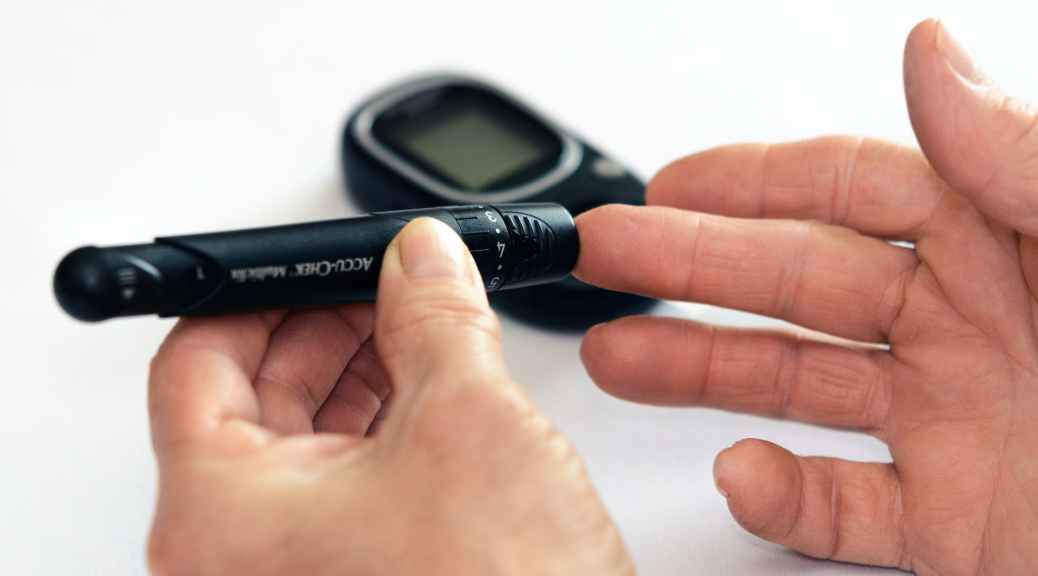
The Impact of Early Diagnosis on Life Expectancy in Diabetes
In the contemporary era of heightened health awareness, individuals are often exposed to alarming statistical data. However, few findings capture our attention as profoundly as the most recent research investigating the relationship between diabetes and life expectancy. The findings of new research published in the journal Diabetes and Endocrinology shed light on the significant impact of the age at which an individual is diagnosed with diabetes on their overall life expectancy.
The statistics are alarming
In 2021, there will be a global incidence of diabetes among 537 million adults. Among the individuals, there has been a noticeable increase in the proportion of young people. According to somber prior research, people with type 2 diabetes tend to die younger than their non-diabetic counterparts by about six years. So far, there has been a dearth of research examining the influence of age on diabetes diagnosis and life expectancy.
The findings of recent research studies
This research comprehensively analyzed population-based data from nineteen high-income nations, using two prominent data sources—the Emerging Risk Factors Collaboration (ERFC) and the UK Biobank. The researchers have made a significant finding, indicating that for each decade by which an individual obtains a diabetes diagnosis at an earlier stage, there is a corresponding reduction of around three to four years in their overall life expectancy.
Consider the following: Was the individual diagnosed at the age of 30? Individuals with diabetes are at an increased risk of experiencing a reduced lifespan of around 14 years compared to those without diabetes. Was the individual diagnosed at the age of 40? One’s lifespan is diminished by around ten years. The veracity of these figures is indisputable.
The Frightening Connections
The investigation also revealed that early identification of diabetes significantly amplifies mortality rates associated with vascular and non-neoplastic ailments, encompassing various situations such as strokes and respiratory disorders. Females have a somewhat elevated susceptibility compared to males, and those diagnosed at a younger age encounter increased fatality rates.
In order to achieve meaningful results, it is essential to take action rather than relying just on verbal expressions. While words may convey intentions and ideas, they alone cannot bring tangible outcomes. By actively engaging in actions that align with our goals and
These results must be considered. The study emphasizes the pressing need to formulate and execute preventive measures, specifically focusing on the younger adult population. This report serves as a compelling reminder that an early diagnosis of diabetes is strongly associated with a significantly reduced lifespan. As health awareness continues to grow, research has shown that an early diagnosis of diabetes can have a significant impact on overall life expectancy. According to recent studies, people diagnosed with type 2 diabetes tend to die six years earlier than their non-diabetic counterparts. However, a new study published in the journal Diabetes and Endocrinology has revealed that the age at which an individual is diagnosed with diabetes significantly impacts their overall life expectancy.
The study analyzed population-based data from nineteen high-income countries using the Emerging Risk Factors Collaboration (ERFC) and the UK Biobank. The results are alarming, showing that for each decade by which an individual obtains a diabetes diagnosis at an earlier stage, there is a corresponding reduction of around three to four years in their overall life expectancy.
For example, an individual diagnosed with diabetes at age 30 is at an increased risk of experiencing a reduced lifespan of around 14 years compared to those without diabetes. Similarly, an individual diagnosed with diabetes at 40 will experience a reduced lifespan of around ten years. The study also revealed that early identification of diabetes significantly amplifies mortality rates associated with vascular and non-neoplastic ailments, such as strokes and respiratory disorders.
Females have a somewhat elevated susceptibility compared to males, and those diagnosed at a younger age encounter increased fatality rates. It is, therefore, essential to take action and implement public health measures that demonstrate efficacy in preventing or postponing the onset of diabetes. The study emphasizes the pressing need to formulate and execute preventive measures, specifically focusing on the younger adult population.
It is time to enhance consciousness, promote the need for transformation, and implement strategic measures to address the challenges posed by diabetes effectively. We must prioritize and take action to prevent and postpone the onset of diabetes to restore a significant amount of life. The lives of individuals are at stake, and we must not delay any further.
While the text emphasizes the pressing need to formulate and execute preventive measures, it does not specify the measures. It would be helpful to know what specific actions can be taken to prevent or postpone the onset of diabetes.
The need to take action is evident. There is a pressing need to implement public health measures that demonstrate efficacy in preventing or postponing the onset of diabetes. It is essential to enhance consciousness, promote the need for transformation, and implement strategic measures to address the challenges posed by diabetes effectively. The lives of individuals are at stake. The objective is focused on preventing a particular ailment and restoring a significant amount of lifespan. We must refrain from delaying any more.
Drinking tea a minimum of thrice every week could reduce the risk of dying from heart problems and is linked with a longer and healthier life, at least in China, new research suggests. Chinese researchers found the rewards associated with tea were more pronounced for drinkers of green, rather than black tea, and regarding those who had been drinking tea regularly over the longer period of time. The advantages were also clearer among men, the research indicated.
Researchers checked out data from 100,902 Chinese people without cases of heart attack, stroke or cancer and divided them into two groups: habitual drinkers who drank tea three or more times every week, those who never drank tea, and those who drank it less regularly. They followed up with them following a seven-year period.
Their analysis found that regular tea drinkers had a 20% lower risk of having cardio disease and stroke, and a 22% lower likelihood of dying from heart disease and stroke. Specifically, they found that regular tea drinkers could expect to live 1.26 years longer at age 50 than individuals who didn’t regularly take part in cup of tea.
Reading the tea leaves about whether drinking green tea is good for you “We came to find that the protective outcome of habitual tea consumption were very pronounced and robust across different outcomes for men, but only modest for women,” Dr. Dongfeng Gu from China’s National Center for Cardiovascular Disease, Peking Union Medical College and the Chinese Academy of Medical Science said via email. “One reason might be which the proportion of habitual tea consumers among men was approximately two and a half [times] as high as that among women,” Gu said. Some 48% of the men in the study were regular tea drinkers, compared with 20% of ladies. Gu said Chinese women were very likely to drink herbal tea produced from rosebuds or lotus leaves however this information wasn’t included.
In their analysis, the researchers controlled for some factors like smoking, drinking, eating habits and physical activity that could have explained the link between tea drinking and driving longevity. However, as an observational study it can’t establish cause and effect, only association. “Other things to consider that are not mentioned within the study are: Firstly, what individuals who weren’t drinking tea were drinking — was tea replaced by sugary drinks or caffeinated beverages … and started that what increased their risk…?” said Jodie Relf, a registered dietitian and spokesperson regarding the British Dietetic Association.
Black vs. green The advantages linked to drinking black tea “were not much,” Gu said, but that could be since there were far fewer black tea drinkers present in the research — only about 8% of the habitual tea drinkers engaging in the study said they preferred black tea.
Gu also said that green tea is a richer supply of flavanoids, especially tea polyphenols, and these bioactive compounds could be protective against cardiovascular disease. While from the same plant and containing the same amount of caffeine, black tea is processed differently from green leaf tea after picking. “Black tea is fully fermented and tea polyphenols might be oxidized into pigments and inactivate during fermentation. Thus green tea ends up being more effective than black tea in anti-oxidation, improving blood lipid profile, and in turn, to become more effective in cardiovascular protection,” Gu said.
Can green leaf tea maximize your brainpower and treat disease? Gunter Kuhnle, a professor of nutrition and food science, University of Reading in the UK, who was not engaged with the study but conducts research into the association between flavanoids and health, said it’s not currently known how tea — or even the compounds found in tea — affect health.
“The antioxidant effect of polyphenols found in tea has long been assumed to become responsible, however this has been resoundingly disproved in the last decade. Many of the compounds present in tea might have a brilliant effect, however this is at the moment still under investigation,” he told the Science Media Centre (SMC) in London. As the world’s most popular drink after water, Gu said that tea-drinking habits varied from place to place and of course the findings will possibly not apply to Western countries, where black tea has been a more accepted choice — often taken with milk or sugar.
Drinking very hot tea almost doubles likelihood of cancer, new study says “Tea consumption is part of a cultural heritage, along with its health effects might be confounded by other consuming patterns, for instance, intake of other flavanoid-rich food or beverages like coffee.” The conclusions of previous research on the health advantages of tea has been inconsistent, Gu said, with the study noting that green leaf tea were linked to lower risk of cadiovascular disease in Japan however in the british isles no link was observed with black tea taken with milk.
“This study strengthens the body of evidence that habitual tea drinking is associated with lower chances of atherosclerotic cardiovascular disease, though it cannot give proof that it’s definitely the tea that’s responsible,” Dr. Jenna Macciochi, a lecturer in immunology at the University of Sussex, told the SMC. However, she noted that “a body of evidence in nutrition means that whole diet patterns are more informative of diet-disease relationships than any isolated food or nutrient.” Dr. Duane Mellor, a registered dietitian and senior teaching fellow at Aston Medical School, Aston University, said that while green leaf tea is safe and may even have benefits, green leaf tea supplements “ought to be considered carefully as there has long been a number of cases of liver damage reported in individuals who have consumed these in large doses.”
Most diets fall under 1 of 2 categories—they either claim to unlock a previously misunderstood secret of nutrition science that may lead to effortless losing weight ; or they promise a cutting-edge option to change your thinking around food which will lead to effortless fat loss
The reality is that though there are certain habits most doctors and nutritionists would encourage once and for all health—eating more vegetables and fruit, exercising regularly, getting enough sleep—there is no one weight-loss system that actually works for everyone . Increasingly, the consensus is the fact that dieting, in the whole, does not work, and that body size is not necessarily a beneficial metric for health.
A lot of us spend our days enclosed by food we don’t actually need for survival, and spend our lives in bodies that look different than what has been held up as ideal. Portion control pits us against ourselves by making external rules—plate size, numbers on a label—the arbiter of your appetites instead of our actual hunger. It also denies that humans sometimes eat for reasons that have nothing to do with fueling our bodies, that pleasure is a legitimate thing to expect from food.
A healthier relationship with food, Thomas says, requires an individual to “understand exactly what the body is asking for and respond to that… Both in terms of your hunger and fullness levels, but additionally such things as pleasure and satisfaction.” There’s no easy way to measure that.







 The Dantzler Report!