Category Archives: Politics

Temporary Relief Granted: Trump’s Gag Order Freeze and the First Amendment Challenge

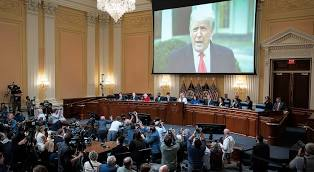
In a recent legal development, U.S. District Judge Tanya S. Chutkan temporarily halted a narrow gag order imposed on former President Trump in the 2020 federal election case. The significance of this decision lies in the broader context of the ongoing legal challenges faced by the 2024 GOP presidential candidate and the intricacies of First Amendment rights.

In response to the previous order, which they deemed to be “breathtakingly overbroad,” Trump’s legal team requested a temporary stay and a reevaluation of the gag order. The order, issued earlier this week, restrained Trump from making public statements that targeted Special Counsel Jack Smith, his staff, witnesses, or court staff. According to the order, these statements posed serious threats to the integrity of the proceedings, necessitating such restrictions.

Smith had initially proposed a “narrowly tailored” gag order, arguing that Trump’s public statements aimed to undermine confidence in the criminal justice system and potentially prejudice the jury pool through disparaging and inflammatory attacks on those involved in the case. The court’s decision to grant a temporary stay allows Trump’s lawyers additional time to present their arguments and seek clarification on the constraints imposed by the order.

While it remains uncertain how long the process of appealing the gag order might take, the case itself underscores the delicate balance between First Amendment rights and ensuring fair legal proceedings. It is a reminder that the boundaries of free speech are not absolute, particularly when public statements may affect the course of justice.

Earlier on the same day, in a separate case, Judge Arthur Engoron presiding over Trump’s New York civil fraud trial, imposed a $5,000 fine on the former president for violating the gag order. Although he stopped short of holding Trump in contempt, he did warn that future violations, whether intentional or unintentional, could result in more severe penalties, including possible jail time.

As the legal battles continue, this case sheds light on the complexities surrounding freedom of speech and its limitations, especially when intertwined with the legal process and concerns about prejudicing fair trials. The temporary stay offers an opportunity for further examination of these legal and constitutional nuances, making it a case to watch for those interested in the intersection of politics, law, and the First Amendment.

Cited Works:

Miranda, Shauneen. “Judge Temporarily Lifts Trump Gag Order in Federal Election Case.” Axios, October 21, 2023. https://www.axios.com/2023/10/21/trump-gag-order-election-case-chutkan-freeze?fbclid=IwAR0eTWKd3UoBtuMrPjL6zK_lRwEL-f3Fjv-u4U7mB_EQ2893gMq3bFw7wbM.

Did Donald Trump’s Statements and Actions on 9/11 Raise Questions?

Introduction:
September 11, 2001’s tragic events left an indelible mark on the United States and the world. In the aftermath of the 9/11 attacks, individuals from all walks of life responded in various ways. This blog post delves into the statements and actions of former President Donald Trump concerning September 11, spanning from the immediate aftermath of the attacks to more recent years. It sheds light on how his words and deeds have intersected with this historic event.

September 11, 2001:
In the immediate aftermath of the attacks, Donald Trump made several statements regarding the impact on the real estate landscape in Manhattan. He described how Trump Tower at 40 Wall Street briefly became the tallest building in downtown Manhattan after the World Trade Center towers collapsed. Furthermore, he later claimed $150,000 from the government for “rent loss” and “repairs” related to the attacks.

September 11, 2013:
On the 12th anniversary 9/11, Trump sent a tweet extending his best wishes, but with an unconventional tone, including a reference to “haters and losers.” This tweet was later retweeted and garnered attention.

November 2015:
During his 2015 presidential campaign, Trump made controversial comments about 9/11. He predicted the attacks in his 2000 book, “The America We Deserve.” He made an unverified assertion about Muslims cheering the Twin Towers collapse in New Jersey.

February 2016:
Trump made statements suggesting that former Presidents Bill Clinton and George W. Bush were responsible for not apprehending Osama bin Laden when they had the opportunity. He also claimed to have lost “hundreds of friends” on 9/11, a statement questioned for accuracy.

April 2016:
In April 2016, Trump claimed to have assisted in clearing rubble at Ground Zero after the attacks, a claim for which no corroborating evidence has been provided. He also mistakenly referred to the date as “7/11” during a campaign rally.

April 2017:
After becoming President, Trump boasted about the ratings of news programs covering September 11 compared to those covering his presidency.

September 2017:
On the 16th anniversary of the attacks, President Trump tweeted a message of remembrance and honor for the victims.

September 2018:
One year later, President Trump praised former New York City Mayor Rudy Giuliani for his response to 9/11 during a Pennsylvania memorial visit.

July 2019:
Just before signing an extension of the 9/11 Victims Compensation Fund, President Trump claimed to have spent significant time at Ground Zero with first responders.

September 2019:
On the 18th anniversary 9/11, President Trump made a statement suggesting he had visually witnessed the planes hitting the Twin Towers from a nearby building, despite his residence being four miles away from Ground Zero.

As of the last knowledge update in September 2021, there was no credible evidence to support Donald Trump’s claim that he assisted in clearing rubble at Ground Zero after the September 11, 2001 attacks. This assertion had faced extensive scrutiny and skepticism from various quarters, including journalists, fact-checkers, and individuals directly involved in the rescue and recovery operations at Ground Zero.

Numerous reports and investigations conducted up to that point had failed to uncover any documented records or credible eyewitness accounts substantiating Trump’s assertion that he actively participated in clearing debris at the site. The absence of such evidence casts doubt on his claim’s veracity.

It is crucial to emphasize that first responders, firefighters, police officers, construction workers, and volunteers were primarily responsible for the post-9/11 rescue and recovery efforts at Ground Zero. Many of these individuals faced significant health risks due to their exposure to hazardous materials during their heroic efforts. Trump’s claim of personal involvement in these activities remained unverified and was met with skepticism, particularly by those who had firsthand experience responding to the 9/11 attacks.

Since this information is based on knowledge up to September 2021, any subsequent developments or additional information regarding this specific claim will not be included in this response. Therefore, it is advisable to consult reputable news sources and fact-checking organizations for updates.

Conclusion:
Donald Trump’s statements and actions related to September 11, 2001, have been diverse and, at times, controversial. His commentary and interactions with this historic event have sparked discussion and debate. Understanding how public figures like Trump engage with moments of national significance can provide insight into their perspectives and priorities.

Cited Works:
What Did Donald Trump Say on 9/11? September 11 Transcripts, Quotes. https://www.newsweek.com/what-did-donald-trump-say-september-11-1826013?fbclid=IwAR1vzO63IoHcTC65PZ5gpSxnugyq6EF9kM_lSDzokL75tGVYs4IxH1VoOMY

Exploring the Special Grand Jury Report on the 2020 Election and its Legal Implications

By Kenneth Dantzler-Corbin, September 9, 2023

Recent events have again cast a spotlight on the American justice system, specifically how it intersects with politics and public figures. A special grand jury has recommended a host of charges relating to the 2020 U.S. Presidential Election, leaving many to wonder about the next steps. This blog post aims to delve into the notable aspects and answer some pressing questions surrounding the issue.

Why Did The Recommendations Differ From DA Fani T. Willis’ Charges?

A special grand jury’s recommendations are just that—recommendations. A District Attorney, such as Fani T. Willis of Fulton County, ultimately can determine which charges, if any, to file. Several factors can contribute to divergent decisions, including:

Interpretation of Law: The DA may have a more conservative or narrow interpretation of criminal activity under the law.

Practical Constraints: Resource constraints or other priorities may affect the DA’s choice of cases.

Burden of Proof: The DA must believe that they can prove the case “beyond a reasonable doubt,” a higher burden than required for a grand jury to recommend charges.

Reliability of Information from the Special Grand Jury

The special grand jury spent seven months collecting evidence and hearing witnesses, a significant duration that suggests thoroughness. However, it is worth noting:

Expertise: The jury was not made up of election law experts or criminal lawyers, which could affect the interpretation of complex laws and facts.

Bias and Influence: Grand juries work in secrecy, so we do not know what, if any, external influences may have swayed their recommendations.

Implications of Public Figures Not Being Charged

The fact that Sen. Lindsey Graham and other public figures have yet to be formally charged could raise questions about the justice system’s impartiality. However, it is essential to note that:

Political Sensitivities: Prosecutors may be cautious to avoid the appearance of politicizing the justice system.

Legal Prudence: The DA may be biding time for a more favorable environment or for more evidence to strengthen the case.

Extensive List of Recommended Charges: Coordinated Effort or Overreach?

The comprehensive list of individuals that the grand jury recommended for indictment could suggest either a broad, coordinated effort to influence the election or potential overreach by the investigative body. This is mainly interpretative and could swing public opinion differently based on the presented evidence and subsequent charges, if any.

Public Interest Vs. Due-Process Rights

Judge Robert McBurney made the grand jury report public, raising concerns about due-process rights for potential future defendants. The balancing act between transparency and safeguarding due process is delicate. Prematurely, while the public has a right to know, releasing such information could compromise a fair trial for the accused.

In conclusion, the legal and social implications of this special grand jury report are numerous and complex. Regardless of one’s political affiliations or opinions, it highlights pressing questions about the justice system, the electoral process, and how public figures interact with both. It is a subject that will likely be debated for some time.

Disclaimer: This blog post is meant for informational purposes and should not be considered legal advice.


Outsourcing services more and more popular – EZYVA. https://www.ezyva.com/outsourcing-services-more-and-more-popular/

Fold Up Bikes: An Uphill Battle? Bobbin Bikes. https://bobbinbikes.com/en-eu/blogs/blog/are-folding-bikes-harder-to-ride

DA to drop murder charge against Denver TV station guard. https://coloradosun.com/2022/03/10/da-drop-murder-charge-tv-station-guard/

Should the Supreme Court oral arguments be televised? https://able2know.org/topic/177969-1

Supreme Court Decision Threatens Progress in Combating Discrimination

Introduction

In a recent and profoundly concerning decision, the United States Supreme Court ruled that Colorado’s public accommodations law, designed to protect against discrimination against the LGBTQ+ community, could not be applied to a business engaged in “expressive activity.” This ruling allows a wedding website designer, who opposes gay marriage on religious grounds, to refuse service to same-sex couples. In his majority opinion, Justice Neil Gorsuch argued that compelling the designer to serve LGBTQ+ couples would violate her free speech rights. However, this decision not only undermines LGBTQ+ rights and dignity but also poses a significant threat to the progress made in fighting discrimination against historically marginalized Americans.

Blurring the Lines Between Discriminatory Conduct and Speech

The Supreme Court’s failure to distinguish between discriminatory conduct and protected speech represents a fundamental misunderstanding. The designer’s refusal to provide services to same-sex couples based on their sexual orientation is a clear act of discrimination, not an exercise of free speech. By characterizing this discriminatory conduct as speech, the Court’s decision allows individuals to weaponize their beliefs to justify discriminatory actions, eroding the safeguards established to protect marginalized communities.

Compromising LGBTQ+ Rights and Dignity

In this case, the Supreme Court’s ruling deals a severe blow to LGBTQ+ rights and dignity. It conveys that discrimination against LGBTQ+ individuals is acceptable if it is cloaked in religious freedom or protected speech. This decision undermines the progress made in recent years to ensure equal treatment and equal opportunities for LGBTQ+ people in various aspects of life, including public accommodations. It threatens to roll back the hard-fought advancements in recognizing LGBTQ+ rights as human rights, putting the community at risk of further marginalization and harm.

Threatening the Legal System and Progress

The Supreme Court’s failure to differentiate between discriminatory conduct and protected speech sets a dangerous precedent. By conflating the two, the Court jeopardizes the effectiveness of anti-discrimination laws and weakens the legal tools available to combat all forms of discrimination. Over the years, the United States has made significant strides in combating discrimination against historically marginalized groups, such as racial and ethnic minorities, women, and the LGBTQ+ community. This decision threatens to unravel decades of progress by providing a potential loophole for businesses to discriminate against anyone they choose under the guise of free speech or religious freedom.

Conclusion

The Supreme Court’s recent decision on Colorado’s public accommodations law undermines LGBTQ+ rights and dignity while compromising progress in the fight against discrimination. By equating discriminatory conduct with protected speech, the Court fails to uphold equality and justice and endangers the legal framework designed to protect historically marginalized Americans. Lawmakers, advocates, and society must recognize the implications of this decision and work towards ensuring equal treatment and protection for all, regardless of their sexual orientation or gender identity. The battle for equality must continue, and we must remain vigilant in defending the rights and dignity of every individual in our society.

Cited Work
Navigating the Intersection of Law and Social Justice: A Look at Racial and Gender Equality, Immigration, and LGBTQ Rights. https://www.legalserviceindia.com/legal/article-10137-section-143a-of-negotiable-instruments-act-power-of-the-court-to-direct-interim-compensation.html

The Intersection of Constitutional Law and Student Loan Borrowers: Implications of a Recent Supreme Court Decision

The United States Supreme Court is seen in Washington, U.S., March 27, 2023. REUTERS/Evelyn Hockstein/File Photo

The United States Supreme Court is seen in Washington, U.S., March 27, 2023. REUTERS/Evelyn Hockstein/File Photo

A recent U.S. Supreme Court decision that significantly impacts student loan borrowers is evidence of the intersection between constitutional law and its effects on economics and psychology. The court’s decision against President Joe Biden’s student loan forbearance program eliminates the potential relief of up to $20,000 for graduates. This ruling, combined with the resumption of debt payments, will undoubtedly impact borrowers’ financial well-being and confidence. With the court deeming the loan forgiveness plan unconstitutional, the hopes of a more manageable financial future for approximately 43 million borrowers have been dashed. Without an alternative plan from the White House, graduates must resume making loan payments starting in October, adding further strain to their wallets and potentially affecting their financial security.

It is disheartening to witness the prevalence of complaints surrounding the repayment of student loans. It is essential to recognize that exhibiting selfishness in various aspects of life does not lead to positive outcomes. It is crucial to remember that everyone encounters situations requiring assistance and support.

Resource:
Resetting student loans brings Econ 101 lessons. https://www.reuters.com/breakingviews/resetting-student-loans-brings-econ-101-lessons-2023-06-30/?fbclid=IwAR1QI0aH272qjvWVxVMOJ9M7nP4u_1MRgC22KjJ2Ln7_yyYJqD0ROrytOLM

Why did the Illinois State House pass a bill prohibiting book bans in libraries, and what are the potential implications of this legislation for libraries and their patrons?

The Illinois State House has approved a bill to prevent public and school libraries from restricting access to books and other materials. However, the bill also grants the Illinois secretary of state the power to withhold grant funding from violators. Alexi Giannoulias, the Democratic Secretary of State, started House Bill 2789. It says that libraries that want to get state grants must have a policy against book bans or follow the American Library Association’s Library Bill of Rights. The bill gives public libraries more freedom to buy books and protects them from attempts to censor them. Republican Rep. Martin McLaughlin expressed concern about the state dictating to local library boards. Giannoulias praised the legislation as groundbreaking and vital for defending the freedom of expression against censorship. The Illinois State Senate must now approve the bill.

What would the implication of this pass do to the educational system? The Illinois State House passed a bill prohibiting book bans in libraries to combat the practice of book censorship and support the principles of freedom of expression. The bill also aims to encourage the improvement of free public libraries and promote sharing of library resources, including digital resources. The potential implications of this legislation for libraries and their patrons are significant. Libraries must adopt a policy against book bans or adhere to the Library Bill of Rights established by the American Library Association to qualify for state grants. This may lead to increased transparency and accountability for libraries but also create tension between local library boards and the state. Additionally, the legislation may help protect patrons’ right to access information and expand their reading choices while ensuring that libraries are not subject to external limitations or censorship attempts. However, the bill’s potential impact on the availability of controversial library materials and the balance between freedom of expression and public decency may be debated.

Source

Nur Ibrahim. Did Illinois State House pass a Bill Prohibiting Book Bans in Libraries?https://www.snopes.com/fact-check/illinois-house-bill-prohibiting-book-bans-libraries/.

Are Supporters worried that Trump’s call for protest is a trap?

Even though former President Donald Trump told his followers to gather to protest his prosecution, online support for public protests is still scattered, unorganized, and quiet. Instead, notable Trump backers are pushing the story that any public event is a “trap” set by law enforcement and that attending will be unproductive and likely to result in charges. This is a typical response to radical movements: violence, a backlash from the police, and a retreat as the remaining followers get scared. The Capitol disruption on January 6, 2021, prompted by a call to action at a Trump event, led to nearly a thousand charges, showing even the most ardent fan that pro-Trump zeal can lead to jail time. Telegram, a pro-Trump channel, asked its members if they would resist if Trump were arrested on Tuesday. Most said no.
“Is the potential protest against Trump’s arrest a J6-style trap?” asked British far-right agitator Paul Joseph Watson’s 218,000 fans on Trump’s social media site, Truth Social. 95% of 1,580 respondents agreed. Ali Alexander, a famous “Stop The Steal” proponent, told his more than 1755,000 Twitter followers that rallying in New York City would put them in the most hostile territory in the US. Megan Squire, Southern Poverty Law Center deputy head of data analytics, has a study folder called “It is a trap” with screen-shots of this online messaging. Trump backers who want to resist face challenges without a primary goal. The most important facts are that tiny groups or domestic militants moved by Trump’s call for rallies are the most significant danger to public safety.
After the FBI raided Trump’s Mar-a-Lago home and Trump attacked

Cited Resource:

Trump warns of arrest, calls for protest, but online support is muted. https://www.usatoday.com/story/news/nation/2023/03/21/trump-warns-arrest-calls-protest-but-online-support-muted/11511264002/

What do you think of Alabama Senator Tuberville’s comparison of descendants of slaves to criminals?

Saturday, during a rally for former President Donald Trump, Sen. Tommy Tuberville, R-Alabama, equated descendants of enslaved people to criminals, generating severe outrage for pushing a racist narrative. Before a predominantly white audience in Minden, Nevada, Tuberville denounced Democrats as “pro-crime.” “They desire crime because they wish to seize what you have.” They seek to control your possessions. “They seek compensation because they believe the perpetrators are entitled to it,” Tuberville added. “Bull****! That is not obliged to them.” In a press release, NAACP President Derrick Johnson described Tuberville’s remarks as “flat out racist, ignorant, and utterly sickening.”

A Call For Reparations: How America Might Narrow The Racial Wealth Gap

America is notorious for racial inequality. A Call for Reparations: How the United States Could Reduce the Racial Wealth Gap
Johnson continued, “His words promote a centuries-old lie about Black people that throughout history has resulted in the most dangerous policies and violent attacks on our community.” The office of Tuberville did not reply promptly to NPR’s request for comment. As a means of addressing the enduring impacts of slavery, support for reparations for black Americans whose ancestors were slaves has increased throughout time. More than 170 Democratic co-sponsors backed a measure to examine reparations for slavery last spring. A House committee voted to advance the proposal, but the entire House of Representatives has not yet examined it. As a means of addressing the enduring impacts of slavery, support for reparations for black Americans whose ancestors were slaves has increased throughout time.

Bibliography

Kim, Juliana. “Alabama Sen. Tuberville Equates Descendants of Enslaved People to Criminals : NPR.” NPR.org, October 10, 2022. https://www.npr.org/2022/10/10/1127872936/senator-tuberville-racist-reparations-stereotype?fbclid=IwAR3H5GpsKM5XxUnWyy1jHr7hJk5xF7vs7YRvdYYE5wHIJyCiDv9QbC2bPTg.

Would you like to know more about Critical Race Theory?

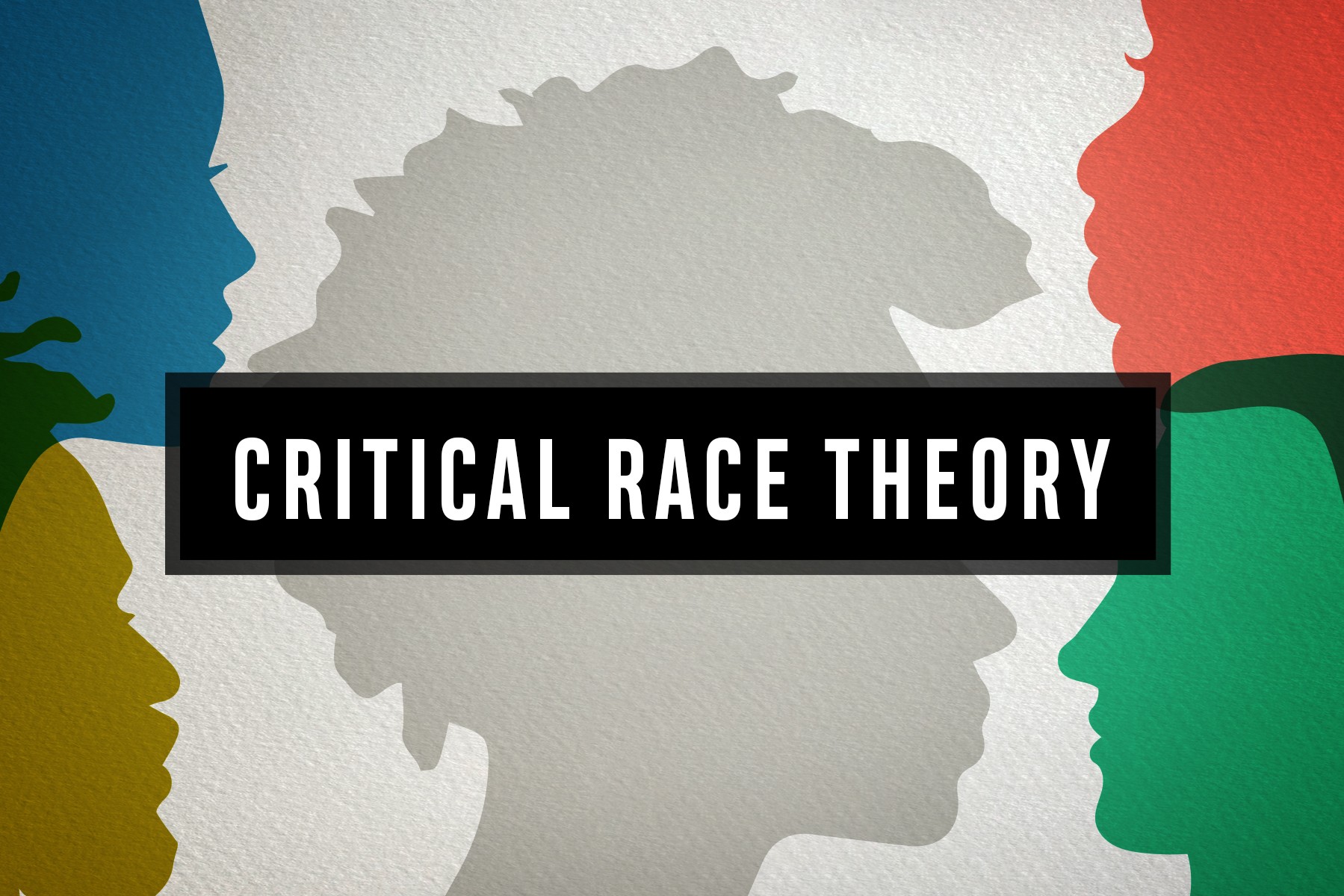
The term “critical race theory” refers to an interdisciplinary intellectual and social movement that originated with civil-rights activists and academics.

Illustration by Marcus Torres

Illustration by Marcus Torres

The mission of the Critical Race Theory (CRT) is to investigate the ways in which race, society, and the law interact in the United States and to contest the liberal mainstream American approach to racial justice. Along with other critical schools of thought, such as critical legal studies, which investigates the ways in which legal procedures maintain the status quo, it emerged for the first time in the 1970s. Theorists affiliated with the Critical Race Theory (CRT) contend that the social and legal construction of race serves to further the interests of white people at the detriment of people of color. Since the year 2020, conservative legislators in the United States have been attempting to outlaw or place restrictions on the teaching of CRT and other forms of anti-racism education in elementary and secondary schools. Those who support the imposition of such prohibitions believe that CRT is not only untrue but also anti-American, promotes extreme leftism, demonizes White people, and indoctrinates youngsters. However, this is a section of my dissertation study that I have completed on this subject. It is written in a way that is easy to comprehend for the lay reader who is interested in learning more about CRT. If you would to purchase a copy of my book on Amazon this is the link: https://www.amazon.com/Critical-Race-Theory-Addressing-Prejudice/dp/B096TJMS4Y/ref=sr_1_7?crid=31E5LGF2EAXTG&keywords=Kenneth+Dantzler+Corbin&qid=1660858504&sprefix=kenneth+dantzler+corbin%2Caps%2C1501&sr=8-7