Tag Archives: Religion

Is the “Spirituality Revolution” genuinely democratizing spiritual experiences for all, or is it diluting traditional spiritual and religious practices by making them more commercial and superficial?

The Spirituality Revolution: No Longer Just for the Religious

There has been a notable change in the societal perception of spirituality in recent years. The era in which spirituality was limited to religious traditions, sacred texts, and monasteries has passed. This issue is of global significance today, impacting individuals regardless of their religious beliefs. This phenomenon, commonly referred to as the “Spirituality Revolution,” is a spontaneous societal movement that acknowledges the significant impact of spirituality on various aspects of life, including health, community, and overall well-being.

Broadening The Definition of Spirituality

Historically, spirituality has been closely associated with religious beliefs and practices. The study focused on the influence of intergenerational transmission of doctrines and customs on individuals’ connections with divine power. Modern spirituality is becoming more individualized. The process of self-discovery is commonly regarded as a personal endeavor aimed at comprehending one’s inner being, the interdependence of all living entities, and the enigmas of the cosmos.

The Healing Powers of Spirituality

The field of medical research is increasingly acknowledging the longstanding understanding among many spiritual traditions about the profound connection between the spiritual and physical realms. A substantial body of research indicates that engaging in spiritual activities, including meditation, mindfulness, and prayer, may benefit mental and physical well-being. These practices can potentially decrease stress levels, enhance concentration, and perhaps positively impact several diseases, including depression and chronic pain.

Community Building and Social Bonds

The new spirituality revolution is not just about individual enlightenment or well-being. It also has communal aspects. Spiritual awareness often fosters a greater sense of community and belonging. Whether it is a yoga class, a meditation group, or a non-religious spiritual gathering, these new “congregations” serve as platforms where like-minded individuals can come together, share, and grow.

Navigating Life’s Challenges

Life is fraught with challenges that can be daunting to navigate alone. Spirituality often provides the framework to understand and manage life’s complexities. Whether it is the loss of a loved one, career challenges, or global crises, a spiritual perspective can offer a bigger picture and a different viewpoint, enabling resilience and a deeper understanding of life events.

The Future of the Spirituality Revolution

This new focus on spirituality is not a fleeting trend but a lasting shift in societal values. The spirituality revolution can profoundly change how society approaches life, health, and community. However, like any significant societal shift, it also comes with its own set of challenges. The commercialization of spirituality, the potential for superficial engagement, and the risk of cultural appropriation are issues that must be navigated carefully.

In conclusion, the spiritual revolution is democratizing what was once the realm of religious traditions and specialists. Its effects are far-reaching and touch upon various aspects of life, including mental and physical health, community building, and individual well-being. As society continues to evolve, it is clear that spirituality will remain an essential part of the human experience, accessible to all and not just a select few.

Cited Works
Tacey, David John. The Spirituality Revolution: The Emergence of Contemporary Spirituality Psychology Press, 2004.


How does spirituality function as a cohesive element in the human experience, and what are the implications for individual and collective well-being in a society that increasingly marginalizes spiritual concerns?

Spirituality serves as a cohesive element in the human experience. Spirituality’s importance lies in providing individuals with a sense of purpose, meaning, and belonging. It helps people make sense of their lives and find comfort and hope in difficult times. Spirituality can also promote personal growth and self-awareness and help individuals develop a moral and ethical framework for their actions. However, it is essential to note that spirituality can mean different things to different people and should be respected as a personal and subjective experience.

The Eclipse of Spirituality in the Modern Age: Navigating Information Overload, Consumerism, and Political Polarization

Spirituality frequently goes unnoticed in today’s world of abundant information, pervasive consumerism, and polarizing political discourse. However, several writers and researchers see spirituality as the cohesive element or the fundamental concept that delineates the intrinsic nature of an individual. The linchpin is a crucial element that maintains a sense of order in the chaotic nature of life, providing shelter from the continuous barrage of external influences that impact our lives. This article explores why spirituality, which is often overlooked in current discourse, warrants more consideration and its potential as a cohesive influence in a progressively divided global society.

The Multifaceted Landscape of Spirituality: From Institutionalized Religions to Personal Transcendent Experiences

The term “spirituality” evokes many reactions and understandings, including a spectrum that includes institutionalized religions and their teachings and personal encounters with transcendence. The notion has several facets beyond religion, culture, and philosophy. However, spirituality is fundamentally the cornerstone of our most profound convictions, ethical principles, and existential meaning. The concept discussed pertains to the framework through which humans understand their interconnectedness with the planet, other people, and a transcendent entity sometimes called the “Divine” or “Higher Power.”

The Dual Role of Spirituality: Understanding Existential Placement and Inspiring Elevated Living Standards

Spirituality serves as a means for humans to comprehend their existential position within the cosmos while simultaneously motivating them to aspire towards an elevated standard of living. This goal is shown through a range of actions, including acts of benevolence, the acquisition of knowledge, and the search for personal tranquility. Spirituality fosters an inclination among individuals to transcend their current preoccupations and short-range objectives to nurture a comprehensive outlook that encompasses the physical, mental, and spiritual dimensions. In this context, it is the fundamental basis upon which people may construct a purposeful and satisfying existence.

The Dual Role of Spirituality: Understanding Existential Placement and Inspiring Elevated Living Standards

The lack of spiritual inclination or the diminished significance attributed to questions of spirituality in contemporary discussions often reflects an internally conflicted culture. The relentless pursuit of wealth, power, and momentary gratification frequently overshadows the profound and long-lasting aspects of human life in today’s society, characterized by an overwhelming presence of materialistic values. The consequences are readily seen in the growing mental health crises, intensifying social tensions, and the pervasive feeling of emptiness that permeates the collective consciousness. When the decline of spirituality, which serves as the cohesive force uniting individuals via shared values and collective objectives, occurs, society becomes susceptible to an existential crisis. As mentioned above, the need for a cohesive spiritual focal point transitions from being just desirable to being essential.

Empirical Evidence and Wellness: Academic Studies on the Role of Spirituality in Physical and Mental Health

Numerous academic investigations have provided evidence supporting spirituality’s influence on physical and mental well-being. Evidence suggests a positive correlation between a strong spiritual life and several beneficial outcomes, such as reduced stress levels, better coping strategies, increased resilience, and higher immunological function. In addition, spiritual communities, including religious congregations, meditation groups, and charity organizations, provide a supportive network and foster a sense of belonging, which may help alleviate loneliness and despair.

However, it is essential to acknowledge that spirituality does not provide a universally applicable answer to the difficulties encountered in life. The process is a profound and subjective exploration that requires self-reflection, receptiveness, and a readiness to confront uncertainty. However, embarking on this path has the potential for significant benefits, including enhanced understanding, improved interpersonal connections, and a heightened sense of fulfillment in one’s existence. The cohesive influence of spirituality has the potential to function as a fundamental basis for establishing connections across divergent factions, cultivating a sense of understanding and compassion, and ameliorating social rifts.

The Elusiveness of Spirituality: Challenges in Scientific Investigation and Practical Implementation

Critics may contend that spirituality is a notion that is hard to define, making it less conducive to scientific investigation or practical implementation. Although spirituality is always subjective, its significance and the need for a more nuanced comprehension should not be disregarded. The diverse range of spiritual experiences significantly enhances its depth and widespread allure. Acknowledging the significance of spirituality allows researchers, healthcare professionals, and legislators to incorporate it into their respective domains, augmenting the overall quality of human existence across several dimensions.

In summary, the significance of spirituality as a cohesive influence or essential element in the human experience is broad and complex. The concept in question serves as the central point around which the intricacies of human life swirl, providing a focal point for comprehending the world and an individual’s position within it. Although spirituality is sometimes marginalized in modern culture, it deserves a more prominent position in our shared awareness. Acknowledging the spiritual component of human existence can enhance one’s overall well-being, regardless of whether an individual seeks consolation via religious practices, meditation, connection with nature, or participation in the community. In light of the multitude of existential challenges society faces, there is an increasingly urgent need for a reinvigorated emphasis on spirituality. As eloquently said by the renowned poet W.B. Yeats, the universe is replete with enchanting phenomena that remain poised, awaiting the refinement of our faculties to see them more acutely.

Cited Works
Burkhardt, Margaret A. “Spirituality: An Analysis of the Concept.” Holistic nursing practice 3, no. 3 (1989): 69–77.

Empowering Social Justice Through Meditation and Love: The Transformative Path of Liberation Theology

As a transformative practice, meditation plays a significant role in liberation theology, intertwining inner reflection with social justice. This potent tool enables people to examine their core values and beliefs, cultivating empathy and compassion for those suffering from societal injustices. Through meditation, individuals develop a heightened awareness of systemic injustices and their responsibility to advocate for change. Love, at the heart of liberation theology, drives the pursuit of justice for the oppressed, acknowledging the intrinsic dignity of every human being. Love empowers individuals to act with empathy, understanding, and solidarity, breaking down barriers that perpetuate discrimination and injustice.

Liberation theology, grounded in love and justice, seeks to liberate the oppressed from oppressive systems and structures that deny their inherent rights and freedoms. It calls for dismantling systems of exploitation and advocates for the empowerment of marginalized communities, enabling them to stand tall in their rightful place as equal members of society. Liberation theology emphasizes the importance of love and compassion in guiding actions that challenge the status quo and work towards a more equitable and inclusive world.

Through the lens of liberation theology, justice takes on a transformative dimension, calling for the redistribution of power and resources to uplift the marginalized and oppressed. Justice demands accountability for those who perpetrate injustice and advocates for reparative actions that seek to rectify historical wrongs. It seeks to break the chains of oppression, ensuring everyone lives with dignity and freedom. Meditation guides this pursuit of justice, nurturing the patience and resilience required to address deeply ingrained social issues and foster lasting change.

Ultimately, the combination of meditation, love, justice, and liberation theology provides a robust framework for collective action. It encourages individuals to challenge their biases and privileges, fostering a society that values every human life and upholds the principles of justice and equality. People who engage in the transformative practice of meditation develop the clarity and inner strength to fight for justice with a deep love for humanity. Liberation theology ignites the flame of hope, inspiring communities to unite in solidarity, and together, they create a world where the pursuit of justice and love prevails, leading to the liberation of all from the chains of oppression.

Sources

Roelofs, H. Mark. “Liberation theology: The recovery of Biblical radicalism.” American Political Science Review 82, no. 2 (1988): 549-566.

Iglesias, Elizabeth M., and Francisco Valdes. “Religion, gender, sexuality, race and class in coalitional theory: A critical and self-critical analysis of LatCrit social justice agendas.” Chicano-Latino L. Rev. 19 (1998): 503.

Why have some of the officials of the Orthodox Church expressed opposition to Russia’s invasion?

Several officials of the Orthodox Church have expressed their opposition to Russia’s invasion of Ukraine. With the noteworthy exception of the Orthodox patriarch of Moscow, the military intervention has been rejected by the majority of people.

Ecumenical Patriarch of Constantinople Bartholomew I, shown leading a service with at the Patriarchal Church of St. George in Istanbul on March 6, has said that Russia’s attack on Ukraine is a ‘violation of human rights.’ (photo: YASIN AKGUL / AFP via Getty Images)

The leader of the Ukrainian Orthodox Church of the Moscow Patriarchate has urged Russian President Vladimir Putin for an “early cessation of the fratricidal conflict.” According to Russian President Vladimir Putin, the Russian invasion of Ukraine was the greatest conventional military operation in Europe since World War II. With staunch defiance, Ukrainian President Volodymyr Zelenskyy has resisted Russian military intervention in his nation since 2014. As a result, the death toll has risen to tens of thousands, with 2.5 million people fleeing to neighboring nations like Poland, Hungary, Moldova, Slovakia, and Romania.

Theodore II, the Orthodox patriarch of Alexandria and all of Africa, has said that Russian President Vladimir Putin is “drunk on power” and “the emperor of our times.” Patriarch Daniel of Romania, the patriarch of the Romanian Orthodox Church, has called for an “immediate cessation of hostilities” in Ukraine. On February 24, Georgian Patriarch Illia II issued a dire warning about a “global calamity” and remembered Russia’s invasion of his nation in 2008. In early March, more than 275 Russian Orthodox priests and deacons from all across the globe signed an open letter. The Russian Orthodox Church has produced a series of remarks in which it expresses implicit support for the Ukrainian invasion while refraining from condemning the Russian government in any manner.

After giving an anti-war sermon in Moscow, Father Ioann Burdin, a Russian Orthodox priest, was detained. He appealed for the restoration of peace and unity with Metropolitan Onufry in a sermon delivered on February 27. He did not mention the separatist Orthodox Church in Ukraine, which he described as “a schism.” Many of Putin’s justifications for invading Ukraine, particularly those related to NATO expansion, received backing from the Russian patriarch. According to reliable sources, Orthodox clergy and faithful in Ukraine have voiced their displeasure of Patriarch Kirill’s stance on the issue. Father Stefano Caprio said that the Ukrainian conflict generates a “deep divide” in the Orthodox Church in the United States.

Patriarch Kirill cannot break away from Putin because “he would bring the whole palace crashing down,” as he puts it. Some other autocephalous Orthodox churches, particularly those politically and ecclesiastically aligned with the patriarch, support the patriarch.

Reference
Kyiv Patriarch Rejects Property Seizures, Saying They’ll …. https://www.rferl.org/a/kyiv-patriarch-rejects-property-seizures-saying-they-ll-give-kremlin-pretext-for-incursions/29580539.html

Widespread Orthodox Church Backlash Unleashed Against Russia’s Aggression in Ukraine. https://www.ncregister.com/news/widespread-orthodox-church-backlash-unleashed-against-russia-s-aggression-in-ukraine?fbclid=IwAR3GpA1ftGo9LyZOllnPLt6aJ62Gez0LR6jeWNSo_nbmuSUq7vHmkcJNMMA

United States Supreme Court will hear arguments

Amy and David Carson desired that their daughter Olivia attend Bangor Christian Schools, a private religious elementary through secondary school. Maine has said that it would not subsidize religious education. The United States Supreme Court will hear arguments on whether the state violated the Carsons’ constitutional rights. Carson v. Makin is the most recent in a series of lawsuits petitioning the Supreme Court for a ruling on religious liberty. If the court decides widely, it might have a profound effect on the ability of religious organizations to receive public financing.

Getty Images (2); TIME


It has the potential to “eviscerate” rules prohibiting public sponsorship of religious education. Maine parents have filed a lawsuit against the state for failing to include their favorite schools in a tuition aid program. Plaintiffs and supporters contend that the state discriminates against religious individuals. The case follows a series of previous judgments on public support for religious organizations. The case sets the free exercise provision of the First Amendment against the establishment clause.
According to some legal experts, Carson v. Makin is likely to become an extension of Espinoza. Officials in Maine assert that religious schools do not give an education “equivalent to a public education.” Carson v. Maine calls into question the relationship between religious liberty and LGBTQ rights. Maine contends that Bangor Christian and Temple Academy in Maine discriminate against members of other faiths and instructors and students who identify as LGBTQ. Advocates fear that government money may flow to discriminatory schools if the plaintiffs win.
Maine is just a few states that give this kind of tuition assistance to pupils who live in areas without public school choice. However, experts are concerned that other states may experience similar pressure from religious groups to implement similar schemes. This possibility concerns Americans United for the Separation of Church and State.

Reference

This Supreme Court Case Could Take a ‘Wrecking Ball’ to Separation of Church and State.https://time.com/6125676/maine-religion-schools-supreme-court-carson-makin/?fbclid=IwAR2y4KzyfGY6NuggKM8mZIgYpKYuhD_YqmKoiKzgnDJ7WUKGTBkFzCmgyW8

Meditation brings you closer to God

It is generally asserted that prayer is conversing with God, while meditation is experiencing God. Often folks wonder how meditation brings you nearer to God, especially if these are typically waiting around for a response to something they have now been hoping for more than a period. Meditation is an effective way to get nearer to God since it sets the individual in a condition of mindfulness. Anyone is conscious of this human body, the bedroom for which they genuinely are sitting (or sleeping), as well as the peaceful and serenity regarding the brain within the hypnotic condition. People believe that the most likely place for God to speak with every person is actually from inside their particular mind, as it’s a personal method of interaction, and it is less likely to want to end up being disturbed or occupied from the existence of other individuals.

Meditation when you look at the Scriptures

There are numerous passages when you look at the publication of Psalms that mention mediation. As an example, Psalms 77:12 says, “I will meditate on your works and give consideration to all your valuable great deeds,” or Psalms 1:2 which states, “Those who take pleasure in legislation associated with the Lord as well as on their legislation meditate almost all the time is going to be gifted.”

Throughout Biblical scriptures, there are plenty of sources to meditating and hearing for God’s reply to offer a reaction to the tests and hardships of existence. It’s particular, to numerous individuals who reflect each day, they have the sophistication of God and feel a lot more tranquility from God’s presence and divine energy than others who choose no experience of God through prayer or meditation.

Meditating on God’s Key Words

People regularly hope for several various factors, e.g., “Please permit my daughter or son get back home safely,” or “Please assist me in generating sufficient cash to pay for all my costs these thirty days” or “Please help me to go this test.” Since prayer is inquiring God to meet a need, meditation is the fact that time when individuals tune in to the reactions or directions from God for you to become a much better person and reside in a condition of comfort or sophistication.

Meditation and God For the Sikh trust they genuinely believe that all prayer is dedicated to thanking God for several he has been doing and all of that he’s offered because God understands precisely what every person demands or wishes; thus, it is unneeded to hope and have God for “stuff.” The theories during the Sikh belief instruct visitors to occur very early every single day and spend some time meditating on God and also the terms from God. Some like to work with a kind of prayer beans to keep them centered on their contemplation regarding the divine. The assumption would be that with program meditation, they can get to the desired characteristics and get over issues that the pride provides triggered each day.

In Islam, the Prophet Muhammed invested a considerable amount of their amount of time in meditation and solitude, enjoying God. When you look at the Qur’an, Prophet Muhammed instructs the folks to meditate regarding the existence of Allah (God) and know Allah is seeing. The Qur’an additionally shows that meditation may be the most significant purchase of behavior to God, and this gives comfort to the people who will be training this large order of paying attention to God.

For Christians, meditation is exclusively the main focus on God’s term. They believe whenever their ideas are entirely concentrated on God’s words, then your solutions that they are looking for are given through that time invested in peaceful solitude with God. Most Christians tend to phone this course of action “prayers” rather than “meditation.” It doesn’t matter what the exercise is actually called, Christians feel this rehearse brings all of them nearer to God. The technique of meditation is just a singularly private training. Concentrating on God, being aware of any solutions or thoughts which are offered, tend to be both exceedingly important to anyone who practices meditation and listens to God’s vocals each day.

Variations of Meditation Based on Beliefs

While nearly all people would agree that meditation is a mental practice, the objectives of various people and different religions vary.

In this post, we will discuss the differences among
major religions concerning the right way they view the practice of meditation.

Hinduism

  • this religion probably has the oldest texts that contend with meditation. While there are several types of
    meditation in Hinduism, they can often emphasize achieving a calm mindset.

This is one of the many more popular perceptions of meditation.

Buddhism

  • founded by Buddha in 500 BC, these religions adopt
    meditation is that which aims to attain enlightenment identical to its founder.

Christianity

  • this religion treats meditation being a prayer. Thus
    practices such as praying the rosary might be considered as meditation inside the Christian world.

Another method of meditation practiced by Christians is simply by pondering on the specific religious passage. It provides a striking difference.

Eastern religions since Christian meditation involves a consistent mind while the opposite is true for Eastern
practices.

Judaism

  • precisely what is known as Jewish meditation truly is several practices that comprise practices such
    as contemplation, visualization, analysis and gaining
    intuitive insights.

Taoism

  • while most religions practice meditation while remaining still, Taoism needs a physically active tackle this. It is often evident within the practice of Tai chi chuan wherein practitioners do what is called ‘meditation in motion.’

While you see, there are fundamental differences among religions regarding how they approach meditation. However, a frequent thread that
keeps them together is the fact that they treat meditation being a mental practice.

Author Resource Box:
Rye vs. Bourbon: What’s The Difference | The Cocktail Novice. https://thecocktailnovice.com/rye-vs-bourbon-whats-the-difference/

Achieving Spiritual Abundance

Spiritual abundance may sound, such as a phrase that’s a challenge to decipher. Is it talking about becoming a very spiritual person, more abundantly spiritual than others? The opportunity to exploit your deepest inner self while allowing the universe to give your needs is a useful definition.

All people are spiritual beings. Whether you’re religious or you do anything spiritual linked to day to day basis or not, you get a spiritual side. Some individuals define their spirituality with a religion, while some think that our connection around the world around us and nature represents that side of ourselves.

No matter how you define it, you can get a greater understanding of your energy and your capability to achieve spiritual abundance by following a few simple steps.

Attracting abundance and attracting prosperity is the very same thing. As well as having the starting point to achieving them is from believing that it’s possible. For a few, this is the hardest thing to educate yourself on about spiritual abundance as they have been conditioned to realize that it’s so difficult to get anywhere in daily life.

Positive thinking and positive visualization follow the principle if you picture something and realize that it’s possible; it is possible to make it happen in your life. It’s essential to get familiar with to do that concerning success, your financial situation, and the situation in your world you want to change with spiritual abundance.

In case you cannot picture yourself along with a large banking account, with bills that get paid, with zero debt or lower debt, you would not attract those things for your requirements. But abundance can be yours if you’ll learn first to decide what it is that you want and after that choose it can easily be yours.

A lot of people write checks to themselves. Some individuals get a fake $1 million bill. But they pay attention to these things; they give the impression of being at them frequently—sometimes many times a day—and they learn how to realize that they will have these features.

Overall the law and regulations of abundance teach one to tap into the ability of your mind and also your beliefs to obtain your dreams. It can be positive thinking and positive visualization amplified and focused to an even sharper point. Alternatively, to just feeling positive, generally speaking, you’ll use that positive feeling toward a specific thing.

If you desire to get rid of debt, pay down your car or even the house, or afford some time alone, you will require a percentage of funds to accomplish that which. And it also may seem like too large some money. You might think that there’s no way you can find a lot of money for anyone things in some unspecified time in the future.

Instead, you encounter months, maybe years, of scraping and sacrificing other stuff to be able to afford it. Because you have the ability to can picture that so you think so, you ensure it is going to happen to do this.

Shift your thinking instead of seeing yourself effortlessly coming into the funds to help these features within your life, and you’ll attract spiritual abundance.

Author Resource Box:
Achieving Spiritual Wealth | Be a Better Person. https://working-on.me/personal-development/achieving-spiritual-wealth

Achieving Spiritual Abundance – wellnesswithmoira.com. https://wellnesswithmoira.com/spiritual-abundance/

Achieving Spiritual Abundance In Your Life – Law of Attraction. https://www.spiritualawakeningportal.com/achieving-spiritual-abundance-in-your-life.html

Black & White Kitchen Design | Home Tracing. https://hometracing.info/black-white-kitchen-design.html

The best way to Consider When Choosing a faith

Have you already recently decided that you would like to attend church? If you’re a grown-up, you have a wide range of different decisions to make. In case you have not attended church for some time now, you may be curious about attending a brand new church other than an issue that you may have visited during childhood. The fact is, many adults are currently embarking on choosing new religions. If you are interested in doing the same, you’ll want to go on reading on.

God is the Inexhaustible Source: Understanding Who God is, from a Theological Perspective
by Dr. Kenneth D. Dantzler-Corbin : New Resource just released on Amazon get yours today..

When it’s time to pick a religion to comply with and assist, many individuals mistakenly make their decision instantly. Even if you are allowed to help make changes right now, you will see how the determination to adhere to and assist a precise religion is considered one that’s meant to follow you along with regularly. That’s the reason it is essential you carefully decide which religion you’d like to follow. That’s why this is a decision that should not be going to be made traveling on an impulse or a whim.

Whenever you reach the point within your life in which you are fascinated by devoting your self to a religion, whether it be now or in conjunction with the longer term, there are several essential factors that you’ll want to take into a note. A type of consideration might be your beliefs. A thing you need that a significant number of religions are known for might be their strong beliefs, many of which appear just as if they are set in stone. Yes, many religions are slowly beginning to evolve with time. However, this will still be an element that you would want to take into a note. Make sure to pick a religion that you may fully support and trust in.

Alongside getting a religion that you believe you’ll be able to truly back the. Additionally, it would help if you found a religion that appeals to your account. In the event you have already announced that you are looking and get a new religion or a new church to attend, there is a likely chance that you have already been receiving feedback or recommendations from the ones that you recognize, namely all your family members. While these recommendations could provide useful insight according to your needs, it is vital that you may stick with your own heart and also your own beliefs. The single last thing that you ought to do is attend a church, although your parents think it’s the “right,” action to take.

In keeping with paying attention to what you would like or believe in, in preference with what individuals around you think, it is also crucial that you not place too much concentrate on your community. North America, certain people, couples, and families have selected their religions dictated by the popularity in their community. Yes, Christianity can be accessible in the community; therefore could seem almost like any of your friends, kin, or neighbors are supporters; it doesn’t prove that you must be. Even if you must cross into a further town to be available for church services, it is advised that you may achieve this, so long as you’ll be able to follow and support the faith which you, yourself, handpicked.

The preceding mentioned points are all points that you will want to take into accounts if you do decide that must be time to refocus on religion. As you likely are aware, you have a great deal of work and research in advance of you, as deciding on a new religion often seems much like an overwhelming process.

Being a reminder, you must select your religion based on you and your private wants, needs, and beliefs. To assist ensure you are generating the most appropriate decision, you may wish to examine multiple religions. You can achieve this by reviewing printed materials, that may be found in many libraries and book stores, and also by utilizing the internet. It may require even analysis to schedule appointments with pastors of your local churches to view what assistance or insight they will be able to offer you within your resolution-making method process.

Author Resource Box:
Have you been quilting along with the Moda Bake Shop and …. https://my.modafabrics.com/wp-content/uploads/2016/02/MBS-QAL-cut-sew-press-repeat.pdf

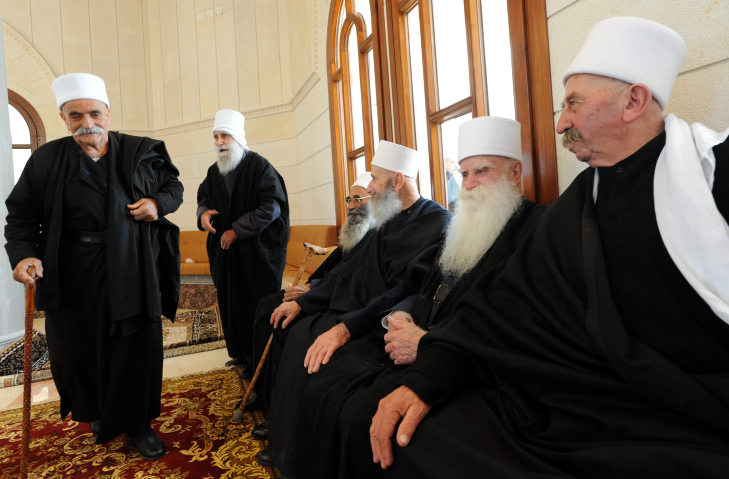
Lebanese Druze

Lebanese Druze (Arabic: دروز لبنان‎) are Lebanese individuals that adhere considering the Druze faith, an ethno religious private group originating from the Near East who self identify as unitarians (Muwahhideen).

The Lebanese Druze people are considered to constitute about 5.2 percent of a given total population of Lebanon and also have around 1.5 million members worldwide. The Druze, who refer to themselves as al-Muwahhideen, or “believers in one God,” are concentrated in the rural, mountainous areas east and south of Beirut.

Under the Lebanese political division (Parliament of Lebanon Seat Allocation), the Druze community is known as one of the many five Lebanese Muslim communities in Lebanon (Sunni, Shia, Druze, Alawi, and Ismaili), even though the Druze are not used considered Muslim. Lebanon’s constitution was intended to guarantee political representation for any of a given nation’s ethnoreligious groups.

Below the regulations of an unwritten agreement known as the National Pact amongst the various political and spiritual leaders of Lebanon, the leading of a given General Staff must be a Druze.

The Druze faith doesn’t follow the Five Pillars of Islam, namely fasting during the month of Ramadan, and making a pilgrimage to Mecca. The Druze beliefs incorporate parts of Ismailism, Gnosticism, Neoplatonism as well as other philosophies. The Druze call themselves Ahl al-Tawhid “People of Unitarianism or Monotheism” or “al-Muwaḥḥidūn.”

The Tanukhids inaugurated the Druze community in Lebanon when the majority of them accepted and a new message that has been preached in the 11th century as a result of their leadership’s close ties with then Fatimid ruler Al-Hakim bi-Amr Allah.

The Druze community in Lebanon played a significant role in the formation of the modern state of Lebanon. Also, though they are a minority, they play a crucial factor in the Lebanese political scene. Before as well as throughout the Lebanese The civil war conflict (1975–90), the Druze were in favor of Pan-Arabism and Palestinian resistance represented from the PLO. Almost all of the community supported the Progressive Socialist Party formed right by their leader Kamal Jumblatt and then they will fight alongside other leftist and Palestinian parties contrary to the Lebanese Front that was mainly constituted of Christians. Right after the assassination of Kamal Jumblatt on March 16, 1977, his offspring Walid Jumblatt took the leadership of one’s party and played an essential role in preserving his father’s legacy after winning the Mountain War and sustained the occurrence the Druze community through the sectarian bloodshed that lasted until 1990.

In August 2001, Maronite Catholic Patriarch Nasrallah Boutros Sfeir toured the predominantly Druze Chouf topic of Mount Lebanon and visited Mukhtara, the ancestral stronghold of Druze leader Walid Jumblatt. The tumultuous reception that Sfeir received not only signified a historic reconciliation between Maronites and Druze, who fought a bloody war in 1983–84, but underscored the reality that the banner of Lebanese sovereignty had a broad multi-confessional appeal which resulted in being harmed a cornerstone when it comes to the Cedar Revolution in 2005. Jumblatt’s post-2005 position diverged sharply, beginning with the tradition of his family. He also accused Damascus of being behind the 1977 assassination of his father, Kamal Jumblatt, expressing the first time what many knew he privately suspected. The BBC describes Jumblatt as “the best leader of Lebanon’s strongest Druze clan and heir to your leftist political dynasty.” The second-biggest political party supported by Druze happens to be the Lebanese Democratic Party led by Prince Talal Arslan, the son of Lebanese independence hero Emir Majid Arslan.

On May 10, 2008, during the 2008 Conflict, clashes occurred between Hezbollah forces and Druze militias in their mountain, resulting in casualties on the two sides. The disputes were started in Aytat, near Kayfoun, and in a little while expanded to cover many spots in Mount Lebanon, including Baysur, Shuweifat, and Aley. A lot of the fighting was targeting Hill 888. After negotiations, a ceasefire was called in from outside the country before Hezbollah could call in artillery support. Releases from Hezbollah leaders in 2016 stated that bombing the mountain with close-range artillery due to the South and longer-ranged artillery from Syria were both one great option and much considered.

Author’s resource box:

Lebanese Druze – Wikipedia. https://en.wikipedia.org/wiki/Druze_in_Lebanon