Category Archives: Health

Nutrition Matters: The Importance of Healthy Eating for Individuals with Alzheimer’s Disease

Eating a healthy diet is crucial for individuals with Alzheimer’s disease to maintain their well-being. This article provides helpful tips for healthy eating in the context of Alzheimer’s. When a person with Alzheimer’s lives with you, buying and preparing nutritious foods that they enjoy and can easily consume is essential. Offering choices and opting for easy-to-prepare meals can simplify the process. For those living alone, non-cooking food options can be purchased, and regular reminders about meals should be given. Maintaining familiar routines and serving favorite foods can make mealtimes more accessible, providing a sense of predictability and comfort for individuals with Alzheimer’s. Patience, respecting personal preferences, and considering cultural or religious food choices are critical. As the disease progresses, adaptations may be necessary, and monitoring weight and eating habits becomes crucial. Caregivers should be attentive to changes in appetite, physical activity levels, and any difficulties with chewing or swallowing, seeking guidance from the person’s doctor when needed.

Some specific examples of easy-to-prepare meals for individuals with Alzheimer’s include:

  1. Sandwiches or Wraps: These can be made with various fillings such as deli meats, cheese, tuna, or egg salad. Using whole-grain bread or wraps adds nutritional value.
  2. Soups or Stews: Prepare simple soups or stews using pre-cut vegetables, lean meats, and low-sodium broth. These can be easily reheated and provide a comforting and nutritious option.
  3. Pre-made Salads: Pre-packaged salads with mixed greens and vegetables can be convenient. Adding grilled chicken, boiled eggs, or canned tuna can increase protein content.
  4. Yogurt Parfait: Layer yogurt, fresh fruits, granola, or nuts in a bowl or cup. It is a quick and nutritious option that can be customized based on taste preferences.
  5. Frozen Meals: Look for pre-packaged frozen meals for older adults or individuals with specific dietary needs. These often require minimal preparation and can provide a balanced meal.
  6. Smoothies: Blend fruits, yogurt, and a liquid like milk or juice to create a nutritious and easy-to-consume smoothie. This can be an excellent option for those struggling with solid foods.

Remember to consider any dietary restrictions or preferences when preparing these meals. It is essential to consult with a healthcare professional or dietitian for personalized recommendations based on individual needs.

Resources
Woodland Valley Softball Little League > Home. https://tshq.bluesombrero.com/Default.aspx?tabid=2520883&mid=2561201&newskeyid=HN1&newsid=267815&ctl=newsdetail
New Discovery: How Much Magnesium Should A Diabetic Take Daily – BeatingDiabetes. https://beatingdiabetes.org/how-much-magnesium-should-a-diabetic-take-daily/

How do muscle contractions and the chemical signals they release contribute to the development of brain networks?

The discovery that muscle contractions release chemical signals that promote brain network development provides valuable insights into the intricate link between physical activity and cognitive function. It sheds light on the molecular mechanisms underlying the observed cognitive benefits of regular physical exercise, especially in the context of age-related cognitive decline and neurodegenerative diseases like Alzheimer’s. The brain is a highly dynamic organ, and these findings suggest that physical activity may support its plasticity and resilience through these muscle-derived signals, thus playing a key role in preserving cognitive function as we age.

This newfound understanding of the role of muscle contractions in brain development has substantial implications for therapeutic strategies and exercise recommendations. Conditions where brain network development is compromised or slowed, such as in certain developmental disorders or following brain injuries, could potentially benefit from tailored physical activity programs designed to stimulate muscle contraction and hence, release of these beneficial chemical signals. This approach may contribute to neural repair and reorganization, aiding recovery and supporting cognitive function in these individuals.

This research not only expands our biological understanding but also underscores the potential value of physical exercise in clinical settings. It provides a strong rationale for the integration of regular physical activity into therapeutic regimes, not just for its well-known cardiovascular benefits, but also for its potential neuroprotective effects. Further research is needed to identify the most effective types and intensities of exercise for different patient groups, but the existing findings clearly highlight the role of physical activity in brain health and development.

Resource

Rodríguez‐Valentín, Rocío, Ignacio López‐González, Ramón Jorquera, Pedro Labarca, Mario Zurita, and Enrique Reynaud. “Oviduct contraction in Drosophila is modulated by a neural network that is both, octopaminergic and glutamatergic.” Journal of cellular physiology 209, no. 1 (2006): 183-198.

Fagerlund, M. J., and L. I. Eriksson. “Current concepts in neuromuscular transmission.” British journal of anaesthesia 103, no. 1 (2009): 108-114.

Woolf, Nancy J., and Larry L. Butcher. “Cholinergic systems mediate action from movement to higher consciousness.” Behavioural brain research 221, no. 2 (2011): 488-498.

Are individuals with low levels of vitamin D at an increased risk of developing long COVID?

Recent research presented at the 25th European Congress of Endocrinology has suggested that low vitamin D levels may increase the risk of developing long COVID. This is a condition where the symptoms of COVID-19 persist for more than 12 weeks after the initial infection. The study looked at 100 patients with and without long COVID and found that those with long COVID had lower levels of vitamin D. This correlation was particularly evident in patients who experienced symptoms like confusion, forgetfulness, and poor concentration. While more research is needed to confirm the link, scientists are exploring whether vitamin D supplements could help reduce the risk of long-term COVID and improve its symptoms.

Long-term COVID risk may increase with low levels of vitamin D. https://www.news-medical.net/news/20230513/Long-COVID-risk-may-increase-with-low-levels-of-vitamin-D.aspx

The Vitamin D Society. http://vitamindsociety.org/

Post-COVID-19 condition (long COVID) – Canada.ca. https://www.canada.ca/en/public-health/services/diseases/2019-novel-coronavirus-infection/symptoms/post-covid-19-condition.html

LONG COVID LINKED TO VITAMIN D DEFICIENCY. http://www.cachehosting.com/news/other/long-covid-linked-to-vitamin-d-deficiency/ar-AA1baMoE

Are current dietary recommendations for cardiovascular health facing challenges in light of emerging evidence regarding the impact of saturated fatty acids on the levels of low-density lipoprotein cholesterol (LDL-C) and lipoprotein A (Lp(a))?

A recent perspective piece published in The American Journal of Clinical Nutrition delved into the current dietary recommendations aimed at reducing the intake of saturated fatty acids in order to mitigate the risk of cardiovascular disease.

The article shed light on the impact of lower saturated fatty acid intake on low-density lipoprotein cholesterol (LDL-C) and lipoprotein A. While dietary modifications have garnered significant attention in cardiovascular disease prevention, the effectiveness of replacing saturated fatty acids with alternative options remains unclear. Recent studies have shown that while reducing saturated fatty acid intake lowers LDL-C levels, it leads to an increase in lipoprotein A levels, which is associated with an elevated risk of cardiovascular disease. Lipoprotein A has been identified as an independent risk factor for atherosclerosis-related cardiovascular disease. Although genetic factors primarily regulate lipoprotein A levels, certain non-genetic factors, including dietary saturated fatty acid intake, contribute to its increase. Replacing saturated fatty acids with carbohydrates or monounsaturated fatty acids does lower LDL-C levels but also results in a concurrent increase in lipoprotein A levels. This finding calls for further research and better clinical practices to monitor the effects of dietary changes on lipoprotein A and LDL-C levels. Additionally, assessing cardiovascular disease risk accurately may require measuring LDL-C independently of lipoprotein A cholesterol content or including an evaluation of lipoprotein A cholesterol content. The study suggests that individualized dietary recommendations tailored to lipid profiles and considering additional cardiac health markers, such as lipoprotein A cholesterol content, may be necessary for effective disease prevention.

Dietary Recommendations For Cardiovascular Health Challenged By New …. https://primenewsprint.com/health/dietary-recommendations-for-cardiovascular-health-challenged-by-new-evidence-on-saturated-fatty-acids-effects-on-ldl-c-and-lpa-levels/

What is the truth about Long Covid?

In 2020, the first wave of deaths from COVID-19 was over, but reports warned of a second wave of deaths from severe symptoms that persisted or worsened. This condition was known as long COVID, and it was projected that a significant proportion of those infected with SARS-CoV-2 would succumb to this life-threatening condition. There were articles in newspapers and magazines that told about all the different kinds of pain people suffered when their doctors couldn’t help. Paul Garner, a British epidemiologist, wrote an early and essential account in which he talked about feeling very tired, having a “muggy head,” having trouble breathing, having sore muscles, and having a “weird feeling in the skin.” Long-term COVID is an uncommon condition not only because of its kaleidoscope of symptoms but also because physicians did not initially recognize it.

So, COVID patients who couldn’t get better during the first few months of the pandemic could describe it. The early “long haulers” complaints were exacerbated by activists, whose advocacy convinced the government to allocate more than $1 billion for research. Three years later, the study has caught up with anecdotal reports and early evidence, and a clearer picture of protracted COVID has emerged. It is neither as widespread nor as severe as was initially anticipated, and the U.S. government has moved to lift the emergency declaration.

Researchers in Australia conducted phone interviews with every person in New South Wales diagnosed with COVID-19 between January and May 2020. The researchers discovered that recovery followed a parabola, with 80% of patients fully recovering after 30 days and 91% after 60 days. However, the population of symptomatic patients continued to diminish, with only 4% of the original patient population still experiencing symptoms four months after diagnosis. In addition, other research indicated that COVID could affect many people. To circumvent these issues, scientists have begun conducting retrospective cohort studies. These studies involve combing through anonymized electronic medical records to identify patients who tested positive for COVID and returned with subsequent symptoms.

The disparity in post-COVID symptoms between the two groups demonstrates the medical havoc caused by the SARS-CoV-2 virus. A study of 150,000 patients in an Israeli health network revealed that those infected were more likely to experience prolonged specific symptoms. These symptoms included loss of taste and smell, concentration and memory issues, difficulty breathing, weakness, hair loss, palpitations, and chest pain. However, by the end of the first year, the differences between the infected and the controls had dissipated mainly. Those that remained affected were a relatively small number of patients. The researchers had anticipated discovering many chronic COVID aftereffects, but they only found a small number—researchers at Oxford University in the U.K.

The Montefiore Medical Center in the Bronx and the New York University Langone Medical Center found no evidence of a higher risk of any initial neurological or psychiatric diagnosis following COVID-19 than any other respiratory infection. However, 6.4% of COVID patients had a “cognitive deficit,” compared to 5.5% of patients with other respiratory infections. There is no evidence that the pandemic has triggered widespread disability, and disability claims have not increased during the pandemic. The New York State Insurance Fund has released a report analyzing long COVID claims made between January 1, 2020, and March 31, 2022. The report reveals that while there were several hundred successful claims after the initial wave, the number dropped to fewer than 10 per month. This number spiked to double digits only after the Alpha and Omicron waves. The most recent data from March 2022 indicates that only about five long-term COVID claims were approved per month out of approximately 3,000 disability claims in the state. This suggests that a substantial number of patients experience significant and potentially onerous symptoms for several months following a SARS-CoV-2 infection but only a minimal percentage experience symptoms for extended durations.

Cohort studies on chronic-term COVID have revealed that it is challenging to establish a causal relationship between a particular infection. Many patients suffer from a condition that differs marginally from short-term COVID. According to data from the Census Bureau and the National Center for Health Statistics, 11% of American adults who have had COVID are presently experiencing residual symptoms. Still, it is impossible to determine whether the SARS-CoV-2 virus causes these symptoms. There is no doubt that many people with long-term COVID struggle with their symptoms, and the medical community frequently fails to treat them properly. In February, Katherine Wu of The Atlantic wrote about a Brazilian chronic COVID patient whose ordeal resembled those of the first long-haulers. The media has continued to raise the alarm about long-term COVID, even though it is not yet known how many people have it, why, and what their chances of recovery are, let alone what the long-term consequences will be for society.

Even patients with the most debilitating form of long-term COVID can experience improvement within weeks and months, not years. Having COVID for a long time is challenging to define because patients can manifest dozens of symptoms in various combinations, none of which are specific to the disease. Post-Covid is a heterogeneous group of people who complain of prolonged COVID, with some suffering from the lingering effects of many diseases, others experiencing the onset of newly emerging symptoms or the continuation of old ones, and others affected by mood disorders and psychiatric symptoms. However, most patients do get better. According to Census Bureau survey data, the percentage of COVID-19 patients who claim they have experienced COVID decreased by 42% between June 2022 and January 2023. In addition, Dr. Knight’s clinic has seen a decrease in the number of COVID-treated patients. For those whose tiredness, insomnia, and chronic pain have been more severe and debilitating, the heightened concern about long-term COVID in recent years could turn out to be a blessing, as it may hasten the day when those with long-term COVID will be able to put their medical conditions behind them for good.

Resource:

The Truth About Long COVID Is Finally Emerging. It’s Not What We Thought.. https://www.msn.com/en-us/health/medical/the-truth-about-long-covid-is-finally-emerging-it-s-not-what-we-thought/ar-AA18P5r5

How to live a positive life

Introduction
Welcome to the world of positive thinking! In today’s fast-paced, frequently stressful world, becoming mired in negativity can be simple. However, with little effort and determination, anyone can learn to live a more positive life. Positive thinking is not just about being happy all the time; it is about cultivating an optimistic outlook on life that allows you to overcome challenges, build strong relationships, and achieve your goals. This article will discuss the power of positive thinking and give tips on living a happier life. So sit back, relax, and get ready to transform your mindset!

How to live positive
Living a positive life is not just about having happy thoughts all the time. It is about making a conscious effort to focus on the good in every situation. One way to do this is by practicing gratitude. Take time each day to reflect on what you are thankful for and write it down. This can be as simple as being grateful for a warm cup of coffee in the morning or having a roof over your head.

Positive Attitude
Having a positive attitude is an essential component of living a fulfilling life. It is not just about being optimistic or having a happy-go-lucky outlook on life; it is also about cultivating a mindset that allows you to see the good in every situation. A positive attitude can help you overcome obstacles, build strong relationships, and achieve your goals.

Another way to live positively is by surrounding yourself with positive people who uplift and encourage you. For example, seek out friends and family members with similar outlooks on life who inspire you to be your best self. Also, care for your body by eating well, working out regularly, and getting enough sleep. When your body feels good, it is easier to maintain a positive attitude.

Lastly, remember that positivity is a choice. You have the power to choose how you react to situations and how you perceive them. Instead of dwelling on negative thoughts or events, try reframing them more positively. By choosing positivity, you can create a happier and more fulfilling life.

One way to develop a positive attitude is by practicing gratitude. Take time each day to reflect on the things in your life that you are thankful for, no matter how small they may seem. This can help shift your focus away from negative thoughts and towards the positive aspects of your life. Additionally, surround yourself with people with a positive outlook on life, as their energy can be contagious and uplifting.

Another critical aspect of maintaining a positive attitude is letting go of negativity. This means acknowledging negative thoughts and emotions without dwelling on them or allowing them to consume you. Instead, focus on finding solutions and taking action toward creating positive change in your life.

Remember, having a positive attitude does not happen overnight; it takes practice and effort. However, with time and dedication, anyone can learn to live with positivity at the forefront of their mind.

Positive Living
Positive living is about cultivating a mindset that focuses on the good in life. It is about embracing positivity and letting go of negative thoughts and emotions. Positive living involves taking care of yourself physically, mentally, and emotionally. This means eating well, exercising regularly, getting enough sleep, and practicing self-care.

One of the keys to positive living is gratitude. Focusing on what we are grateful for helps us see the good in our lives and appreciate what we have. Another essential aspect of positive living is mindfulness. Being present and fully engaged in your work can help you feel more positive and fulfilled.

Ultimately, positive living is about seeing the world through positivity rather than negativity. It is not always easy, but with practice, it can become a habit that transforms your life for the better.

Confronting negative people
We will inevitably encounter negative people in our lives. They may be coworkers, family members, or even friends. Unfortunately, these individuals can bring us down and make us feel negative about ourselves and the world around us. However, we must remember that we can control how we react to these people.

One way to confront negative people is by setting boundaries. Let them know that their negativity is not welcome in your life and that you will not tolerate it. This can be done politely but firmly. Additionally, try to limit your interactions with these individuals as much as possible. Instead, surround yourself with positive people who uplift and inspire you.

Another approach is to practice empathy and understanding toward negative people. Often, their negativity stems from their struggles and insecurities. By showing compassion, you can help shift their perspective and bring positivity into their lives.

Remember that it can be hard to deal with negative people, but it is crucial for our mental health and well-being that we do. Do not let others bring you down or steal your joy. Instead, stay positive and surround yourself with those who uplift you.

Living a positive life when things go wrong
Life is unpredictable, and things sometimes go differently than planned. Falling into a negative mindset is easy when faced with unexpected challenges or setbacks. However, it is essential to remember that maintaining a positive outlook can help us overcome these obstacles and emerge stronger on the other side.

One way to live positively when things go wrong is to focus on solutions rather than dwelling on the problem. Instead of getting stuck in a cycle of negativity, brainstorm potential solutions and take action toward resolving the issue. Additionally, practicing self-care and seeking support from loved ones can help us stay resilient during difficult times.

It is also important to remember that setbacks and failures are a natural part of life. Rather than viewing them as personal shortcomings, try to reframe them as opportunities for growth and learning. By thinking this way, we can approach challenges with curiosity and an open mind, which will help us grow as people in the long run.

To stay positive when things go wrong, you need to be strong, kind to yourself, and willing to see problems as chances to grow. By cultivating these qualities within ourselves, we can navigate life’s ups and downs with grace and optimism.

Conclusion
In conclusion, positive thinking is a powerful tool that can transform your life. It enables you to see the good in every situation and solve problems. Living positively requires a conscious effort to focus on the good things in life and let go of negative thoughts and emotions. It also involves surrounding yourself with positive people who encouraging and motivate you toward your goals. When faced with challenges, a positive attitude helps you to stay calm and find creative ways to overcome them. Remember that positivity is not just a state of mind but a way of life, so make it a habit to practice positivity every day. With time, you will notice significant improvements in your mental health, relationships, and overall well-being.

What You Should Know Regarding Monkeypox?

Thousands of people have contracted monkeypox throughout the United States. The spread has been designated as an epidemic, which naturally arouses public concern. Discover who is at danger and how we can protect ourselves, our community, and our loved ones.

How does monkeypox spread?

It is essential to realize that viruses are not selective. They want just a host. The same holds true for monkeypox as for any other virus. To help reduce the spread of monkeypox, we must first eliminate its stigma. Anyone, regardless of age, gender, race, or sexual orientation, is vulnerable.

It is evident that monkeypox is transmitted by direct skin-to-skin contact. Identifying and reducing high-risk behaviors and settings is the most effective method of disease prevention.

According to the Centers for Disease Control and Prevention (CDC), the following behaviors enhance the likelihood of acquiring monkeypox:

  • Close contact with a person or individuals who have been diagnosed with monkeypox or with a person or persons who have a rash that resembles monkeypox.
  • Close or close personal contact with people infected with monkeypox in a social network. Social networks might include individuals met at pubs, parties, on websites or via apps.
  • Sexual contact or intimate behavior with several partners in places where monkeypox is known to occur.
  • Within 21 days after sickness start, travel outside the United States to a nation with confirmed cases of monkeypox or where monkeypox is endemic.
  • Occupational exposure to monkeypox or other orthopoxviruses, such as testing laboratory personnel or some public health personnel. In these situations, the right use of personal protective equipment will aid in reducing danger.

How can I reduce my infection risk?

As with any infectious illness, the pillars of infection prevention and control may be applied: When you are unwell, you should wash your hands, avoid touching your eyes, lips, and face, and avoid contact with others. Avoid prolonged physical contact, contact with respiratory secretions, and contact with products or textiles used by someone with monkeypox to reduce your chance of developing the disease.

Is a monkeypox vaccination available?

Kansas City has provided the University of Kansas Health System with a restricted amount of vaccination doses. The health care system administers vaccinations to people who fulfill the qualifying requirements. Currently, the CDC advises immunization against:

People who are aware that a sexual partner has been diagnosed with monkeypox during the preceding 14 days.

Individuals who have had several sexual partners in the preceding 14 days in an area where monkeypox is known to exist.

Individuals who have reported any of the following during the preceding 14 days:

  • Sex with numerous partners or multiple partners.
  • Sex at a commercial sex venue or in conjunction with an event, location, or specified geographic region where transmission of monkeypox has been recorded.
  • We are devoted to providing everyone with high-quality care. If you are a current patient of the health system and feel you fulfill any of the eligibility requirements, contact your primary care physician or provider (by phone, text message, or MyChart message) for further information.
  • We must collaborate to eliminate the stigma associated with this condition and prioritize wellness. We highly urge persons at high risk or who are worried to communicate honestly with their healthcare professionals.

Did you know that unvaccinated are 14 times more likely to get monkeypox, data from eligible shot recipients shows?

Those who have not had the vaccine for monkeypox are 14 times more likely to get the illness than those who have, according to fresh, but limited, statistics released by the Centers for Disease Control and Prevention on Wednesday morning.

The sampled population consists of males who engage in sexual behavior with other men or persons with several sexual partners. The figures provide our first glimpse at how effectively the JYNNEOS vaccine, the most effective method of protection against monkeypox, functions in the real world.

At a briefing on monkeypox held at the White House on Wednesday, CDC Director Rochelle Walensky said, “These new data give us cautious comfort that the immunization is functioning as planned.”

Dr. Demetre Daskalaskis, the White House’s deputy response coordinator for monkeypox, requested that individuals disseminate the “early good news.”

He said that “information is power” and that it empowers people to make health-related decisions with more knowledge and confidence.

What caused the dramatic reduction in monkeypox cases in the United States?

Since the beginning of the current outbreak, there has been little information on the effectiveness of the JYNNEOS vaccine, which was initially designed to combat smallpox.

Since the outbreak began in May, the Food and Drug Administration, the Centers for Disease Control and Prevention, and the National Institutes of Health have conducted many studies into the safety and effectiveness of the JYNNEOS vaccine, mostly at the request of LGBTQ community activists.

Walensky also observed that the new data is only a glimpse, while being optimistic. Concerning the extent of JYNNEOS’s protection, several questions remain unresolved.

For instance, the new vaccination efficacy rate was not predicated on two doses given 28 days apart. Instead, it relied on information gathered two weeks after the first shot.

Even though the majority of federal public health experts advocate two doses, the CDC has not yet provided information on the effectiveness of the vaccine after all doses have been administered.

“These early results, together with similar findings from studies undertaken in other countries, suggest that even a single dose of the monkeypox vaccine gives at least some initial protection against disease. In spite of this, laboratory studies have shown that immune protection reaches its peak two weeks following the second vaccination dose, or “Wednesday,” as Walensky said.

She said, “Because of this, we continue to recommend that individuals get two doses of the JYNNEOS vaccine, 28 days apart, in order to provide robust, long-lasting protection against monkeypox.”

According to Walensky, further study is being conducted on the efficacy of two dosages.

The CDC has not yet separated the efficacy data for various injection techniques to see whether there are any differences between the current approach, in which a lower dosage is injected just beneath the skin, and the earlier way, in which a deeper injection is administered.

Also unclear is the extent to which changes in behavior might influence the effectiveness of the vaccination results.

If vaccinated individuals have fewer sexual partners and possibilities for skin-to-skin contact, they may be less likely to get monkeypox.

Eliminating monkeypox is feasible, according to experts, but containing the disease remains challenging.

According to Walensky, a key lesson from COVID-19 is that the CDC intends to make all of its existing data accessible in real time as soon as it becomes available, even while additional data are on the way.

“Through a portfolio of vaccine effectiveness programs, [the] CDC will continue to analyze how well these immunizations are functioning in the continuing outbreak. These endeavors will assist us in determining the extent and duration of the protection provided. “We’ll continue to provide you with further details as they become available,” Walensky added.

Even though the JYNNEOS vaccine is not yet approved for use by the general public, the CDC is expanding the number of at-risk Americans who are eligible to get vaccination against monkeypox.

The inclusion now includes gay or bisexual men who have had one recent romantic relationship or who have just received a new diagnosis of one or more STDs. It also includes sex workers.

Although many states and jurisdictions have already expanded eligibility, the CDC’s latest step puts it more in line with regional guidelines.

Monkeypox caused the death of a citizen of Los Angeles County

Monkeypox caused the death of a citizen of Los Angeles County who had a weakened immune system, according to the announcement made by local health authorities on Monday. It is considered to be the first mortality in the United States caused by the illness.

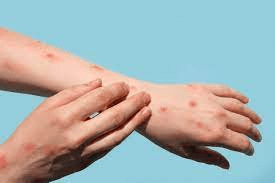
A patient with the rash associated with monkeypox. Photo: Getty Images


The Department of Public Health for Los Angeles County made the announcement on the cause of death, and a representative for the department said that an autopsy verified the information. The patient had a significantly impaired immune system and had been admitted to the hospital. There was no more information about the individual that was made public.
 
The Centers for Disease Control and Prevention (CDC) monitors instances of the disease and reports that it has not been linked to any fatalities in the United States. Officials from LA County have said that they collaborated with the CDC on this matter.
 
When asked if this was the first death in the U.S., a CDC representative acknowledged that they were working together but didn’t answer right away.
 
On August 30, authorities from the Texas Department of Public Health stated that an individual who had been diagnosed with monkeypox had passed away. The individual was also critically immunocompromised, and an examination is now being conducted into their case to establish the possible impact that monkeypox had in their passing.
 
The virus that causes monkeypox is contagious and can only be passed from person to person via prolonged skin-to-skin contact. It may bring on symptoms such as a rash, fever, pains all over the body, and chills. The illness has been directly connected to the deaths of just a small number of individuals all across the globe, and hospitalizations and fatalities are quite uncommon.
 
People who are in close contact with someone who has the disease; people who are aware that a sexual partner was diagnosed within the past two weeks; and gay or bisexual men who have had multiple sexual partners within the past two weeks in an area where it is known that the virus is spreading are all encouraged to get the monkeypox vaccine. It is also suggested that health care workers who are at a high risk of exposure get vaccinations.

Do you think that persons who experience anxiety and depression could benefit from taking vitamin B6?

According to recent research, vitamin B6, a popular vitamin supplement, may benefit those who suffer from anxiety and depression. However, in the UK, researchers recruited 478 participants with anxiety or depression and randomly allocated them to receive high dosages of vitamin B6, vitamin B12, or a placebo. They then evaluated the subjects before and after they had taken the tablets for a month. Compared to those taking a placebo, those taking the B6 supplement reported significantly fewer symptoms of anxiety and depression. They conclude that some people may be able to prevent the adverse effects of prescription drugs by taking vitamin B6 supplements. However, with your doctor first before beginning a new supplement.