Introduction
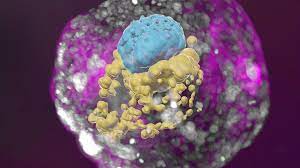
In a groundbreaking experiment that could revolutionize our understanding of human development, scientists have successfully grown a model human embryo without using sperm or egg cells. This unprecedented achievement marks an important milestone in the field of developmental biology. It opens the door to numerous possibilities for studying early human development and the ethical discussions surrounding such advancements.
The Experiment
A team of scientists, utilizing a sophisticated combination of stem cells and carefully controlled environmental conditions, grew a model human embryo that closely mimics natural development up to a particular stage. Researchers could coax stem cells into organizing themselves into a structure resembling a human embryo by utilizing specific growth factors and a tailor-made environment.
The study aims to provide invaluable insights into the earliest stages of human development and address questions that have puzzled scientists. While traditional methods like animal testing offer some information, they still need to completely mirror the complexities of human biology. This model embryo, however, brings us one step closer to understanding the secrets of how our bodies are built.
Applications and Implications
Medical Research
The potential applications of this research are broad and varied. The research could accelerate our understanding of developmental disorders, congenital diseases, and the mysterious processes that guide cellular development. It might also lead to advances in fertility treatments and offer new avenues for studying reproductive health.
Drug Testing
In pharmaceuticals, the ability to test drugs on human-like systems without risking human lives could speed up drug development. New medications could be tested for their effects on early-stage human development, potentially reducing the need for animal testing.
Ethical Considerations
As with any scientific advancement that tinkers with the fundamentals of life, we must address arising ethical concerns. The model embryo cannot develop into an entire human being. However, the research raises questions about the ethical implications of manipulating early human development, even in a lab setting.
Some of the ethical questions that arise include:
- At what stage does the model embryo become too “human-like” to experiment?
- Could this research lead to unauthorized or unethical applications, such as human cloning?
- How can regulations keep up with such rapidly advancing technology?
Future Outlook
While this experiment takes a remarkable step forward, we must consider its limitations. For instance, the model embryo only mimics development up to a particular stage, and there is still much to learn about later phases of human development.
Moreover, ethical guidelines must keep pace with technological advancements. Regulatory bodies and the scientific community must engage in active dialogue to ensure this research is conducted responsibly.
Conclusion
The successful growth of a model human embryo without the use of sperm or egg cells has brought humanity one step closer to unraveling the complexities of our development. This could have broad applications across various medical research and drug development fields, but it also calls for careful ethical considerations.
As we move forward, it is crucial to proceed with curiosity and caution, ensuring that our pursuit of knowledge does not overstep ethical boundaries. Only then can we fully unlock the potential of such pioneering research.
Maiya Focht, Scientists grew a model human embryo in a lab without a sperm or egg, bringing humans one step closer to understanding the secrets of how our bodies are built. https://www.businessinsider.com/scientists-made-model-human-embryo-without-sperm-or-egg-2023-9?fbclid=IwAR2_R2xaG924N7Xfkg-klAJawJg_eF1vF-f_DaITVSFD-Q1kChNjgjz7Ozg. Accessed on Sep 7, 2023
 The Dantzler Report!